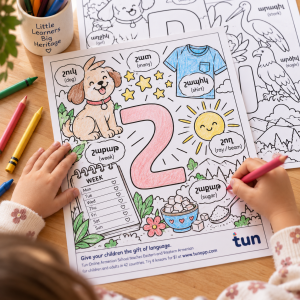
Learn Eastern or Western Armenian Online

Learn Eastern or Western Armenian online

Start learning to speak, read and write in Armenian with easy-to-follow Armenian lessons online and entertaining games, available on demand.

Tuna App

Students in 42 countries and counting…

We have helped more than 25,000 people learn Eastern and Western Armenian – with students in the US, Canada, Australia, Europe, Russia, the Middle East, and even Armenia.

Try 4 lessons for $1 →

Students in 42 countries and counting…

We have helped more than 25,000 people learn Eastern and Western Armenian – with students in the US, Canada, Australia, Europe, Russia, the Middle East, and even Armenia.

Try 4 lessons for $1 →


Log in and learn any time

Eastern and Western Armenian lessons are delivered via a webapp, giving you the flexibility to log in and learn whenever it suits you. And all lessons stay online as long as you’re enrolled – so, if you get busy, they’ll be there waiting for you.

Try 4 lessons for $1 →

Log in and learn
any time

Eastern and Western Armenian lessons are delivered via a webapp, giving you the flexibility to log in and learn whenever it suits you. And all lessons stay online as long as you’re enrolled – so, if you get busy, they’ll be there waiting for you.

Try 4 lessons for $1 →

Practice with other Armenian speakers

Make new friends, improve your speaking proficiency, build business connections and discover how other Armenians around the world live — via text, voice and video chat.

Try 4 lessons for $1 →

Practice with other Armenian speakers

Make new friends, improve your speaking proficiency, build business connections and discover how other Armenians around the world live — via text, voice and video chat.

Try 4 lessons for $1 →

Watch videos, play games and download worksheets

Watch videos, listen to audio, download practice exercises, play learning games and receive tutor support when you need it. We make learning Eastern and Western Armenian interesting, with fun formats to suit every student.

Try 4 lessons for $1 →

Watch videos, play games and download worksheets

Watch videos, listen to audio, download practice exercises, play learning games and receive tutor support when you need it. We make learning Eastern and Western Armenian interesting, with fun formats to suit every student.

Try 4 lessons for $1 →

Join at beginner or intermediate Armenian speaking levels

We’ll help you progress from beginner to advanced, with proven learning methodologies that build Eastern and Western Armenian vocabulary, Armenian sentence structure, Armenian grammar, Armenian pronunciation and confidence, so that learning is engaging and long-lasting.

Try 4 lessons for $1 →

Join at beginner or intermediate Armenian speaking levels

We’ll help you progress from beginner to advanced, with proven learning methodologies that build Eastern and Western Armenian vocabulary, Armenian sentence structure, Armenian grammar, Armenian pronunciation and confidence, so that learning is engaging and long-lasting.

Try 4 lessons for $1 →


Learn Eastern or Western Armenian dialects

We teach both Eastern and Western Armenian, so you can focus on one dialect, or come to learn the differences between Eastern and Western Armenian, over time.

Try 4 lessons for $1 →

Learn Eastern or Western Armenian dialects

We teach both Eastern and Western Armenian, so you can focus on one dialect, or come to learn the differences between Eastern and Western Armenian, over time.

Try 4 lessons for $1 →

Eastern and Western Armenian courses and resources
for every level

Browse the selection of Eastern and Western Armenian lessons, masterclasses, Armenian workbooks and Armenian flashcards.

See all Armenian learning resources →

Armenian Reading and Writing Workbook Bundle x 3

Original price was: $53.00.Current price is: $53.00.

Armenian English Alphabet Flashcard Set

Original price was: $24.00.Current price is: $24.00.

Armenian Flashcard Set – Emotions and Feelings PRINTABLE

Original price was: $17.00.Current price is: $17.00.

Practice Writing Armenian Fridge Whiteboard & Pen

Original price was: $24.00.Current price is: $24.00.

Eastern and Western Armenian courses and resources for every level

Browse the selection of Eastern and Western Armenian lessons, masterclasses, Armenian workbooks and Armenian flashcards.

See all Armenian learning resources →

Armenian Reading and Writing Workbook Bundle x 3

Original price was: $53.00.Current price is: $53.00.

Armenian English Alphabet Flashcard Set

Original price was: $24.00.Current price is: $24.00.

Armenian Flashcard Set – Emotions and Feelings PRINTABLE
Original price was: $17.00.Current price is: $17.00.

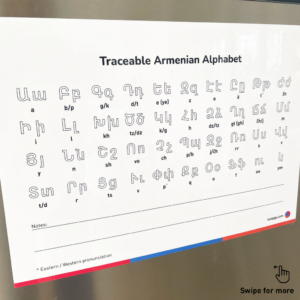
Practice Writing Armenian Fridge Whiteboard & Pen

Original price was: $24.00.Current price is: $24.00.

Already fluent in Eastern and Western Armenian?

We are on a mission to help a generation of Armenians learn to speak, read and write. With your help, we can develop more learning resources, improve our learning technology and positively impact more people.
Armenian Poetry for Learners: Finding Meaning From Mashtots to the Modern Day

When you first read an Armenian poem and feel something shift There is a particular kind of silence that falls when someone reads Armenian poetry aloud. Whether it is the medieval mysticism of Gregory of Narek’s “Book of Lamentations,” the patriotic fire of Hovhannes Tumanyan’s verses, or the aching diaspora poems of Zahrad, the words carry a weight that transcends their literal meaning. For learners of Armenian, encountering poetry in the original language is often a turning point — the moment when the language stops being a system of rules to master and becomes a medium of profound expression that you can access directly. Armenian poetry is not a niche interest for specialists. It is one of the most accessible and rewarding gateways into deeper language proficiency, precisely because poetry uses language in concentrated, memorable, and emotionally charged ways. A single poem can teach you more about Armenian vocabulary, rhythm, and cultural reference than weeks of textbook study — and it will stay with you longer because of the emotional resonance that poetry creates. For diaspora Armenians especially, reading the poets who wrote about exile, identity, memory, and return can feel like reading your own experience encoded in someone else’s words. The poetry of the Armenian diaspora — from the shores of Beirut to the streets of Los Angeles — speaks directly to the experience of carrying a culture across oceans and trying to keep it alive in new soil. When you read those poems in Armenian, the language they use is not just literary; it is the language of your own unspoken thoughts. What makes Armenian poetry linguistically rich and accessible Armenian poetry spans more than sixteen centuries, which means it offers material for every level of learner. The simplest Armenian folk verses and nursery rhymes use basic vocabulary and repetitive structures that beginners can decode with help. The poetry of the medieval period, while linguistically more complex, often follows regular metrical patterns that make it easier to read aloud and remember. Modern Armenian poetry, from the Soviet era and the diaspora, uses contemporary vocabulary and thematic material that connect directly to the concerns of modern life. The phonetic consistency of the Armenian alphabet means that reading poetry aloud — even when you do not fully understand every word — is a powerful pronunciation and fluency exercise. The rhythm of the poetry guides your pacing. The rhyme schemes create predictability that supports your reading. The emotional content motivates you to push through unfamiliar vocabulary because you want to know what the poem is saying. Many Armenian poems also exist in translation, which means you can use a parallel-text approach: read the Armenian version alongside a trusted English translation, using the translation to unlock the original and gradually weaning yourself off it as your proficiency grows. This method, widely recommended by language acquisition researchers, works particularly well with poetry because the density of meaning in each line rewards close, repeated reading. Why poetry fills a gap that prose and conversation cannot Conversation and prose tend toward the utilitarian — they communicate information, tell stories, exchange ideas. Poetry does something different. It uses language to create an experience, to evoke a feeling, to make you see something familiar in a new way. For language learners, this means that poetry engages parts of the brain that other forms of language input do not reach. The emotional response to a poem strengthens memory. The aesthetic pleasure of a well-crafted line motivates repetition. The compression of meaning in poetry forces you to engage deeply with each word, each phrase, each image — exactly the kind of intensive processing that builds durable language skills. Poetry also offers something that is increasingly rare in the digital age: a reason to read the same text multiple times. A poem rewards rereading. Each pass reveals new layers of meaning, new connections between images, new appreciation for a particular word choice. For the language learner, each rereading is also a vocabulary and comprehension workout, reinforcing what you already know and adding depth to what you are still learning. At Tun Online Armenian School, students can build the foundational vocabulary, grammar, and reading fluency that make poetry accessible. The structured curriculum progresses from simple texts to more complex material, always providing the support learners need to understand and engage with what they are reading. As your proficiency grows, the vast world of Armenian poetry — one of the oldest and richest literary traditions in the world — becomes increasingly open to you. Practical strategies for reading Armenian poetry Start with short, simple poems and read them repeatedly. Armenian children’s poetry, folk rhymes, and the simpler works of modern poets provide accessible entry points. Read the poem aloud several times before consulting a translation, focusing on the sound and rhythm even if the meaning is not fully clear. Then read the translation. Then read the original again, noting which words and phrases you now understand. This cycle of repeated reading with intermittent reference to translation is one of the most effective ways to build reading fluency. Choose poets whose themes resonate with your own reasons for learning Armenian. If you are learning to connect with heritage, read the diaspora poets — Zahrad, Zareh Yaldizciyan, Vahe Vahian — who wrote about exile and identity. If you are learning out of love for Armenian culture and history, read Tumanyan, Charents, or the medieval poet Narekatsi. When the themes of the poetry connect to your own life, the motivation to understand every word becomes self-sustaining. Use poetry as a pronunciation warm-up. Before each study session, read one stanza of an Armenian poem aloud. Focus on producing the sounds clearly and following the rhythm of the lines. This practice activates the articulatory muscles you need for speaking Armenian and shifts your brain into the phonological mode of the language. Over time, you will build a repertoire of memorised lines that you can draw on for speaking practice. Finally, write your own simple Armenian poems. […]

Armenian for Parents: Raising Bilingual Children in the Diaspora

When you want your child to have something you almost lost If you are a parent in the Armenian diaspora, the question of language is never quite settled. You want your children to know where they come from. You want them to understand the conversations at family gatherings, to laugh at the jokes, to feel the same belonging you felt — or perhaps the belonging you wished you had felt. But raising children in a country where Armenian is not the dominant language means swimming against a current that has pulled many families away from the language within two or three generations. The decision to raise your children speaking Armenian is not a small one. It requires consistency, creativity, and a willingness to speak Armenian even when it is easier to speak English. It means answering questions about why they have to learn this language when none of their friends speak it. It means finding Armenian books, music, and community in places where those things do not appear automatically. And for many parents, it means learning Armenian themselves at the same time they are trying to teach it to their children — a daunting prospect that can feel like building a bridge while walking across it. But the research on bilingual childhood development is overwhelmingly positive. Children who grow up speaking a heritage language alongside the dominant language of their country develop cognitive advantages in executive function, metalinguistic awareness, and cultural competence. They have access to deeper relationships with relatives who speak the heritage language. They carry a connection to their ancestry that monolingual children of the same diaspora background often lack. And they grow up knowing that they belong to a story larger than their immediate surroundings. What makes raising Armenian-speaking children different from other bilingual parenting Armenian in the diaspora occupies a specific position that shapes the parenting experience. Unlike Spanish, Mandarin, or French, Armenian is rarely available in the schools, media, and public spaces of most diaspora countries. Parents cannot rely on the surrounding environment to reinforce what they teach at home — the reinforcement has to come from family, community institutions, and intentional exposure. This makes the parental role even more critical and the task more demanding. The two varieties of Armenian add another layer of consideration. If your family speaks Western Armenian and the available children’s resources are in Eastern Armenian, or vice versa, you face decisions about which variety to prioritise. Many diaspora families end up using a mix, which is natural and workable but requires awareness so that children do not become confused about which pronunciation or vocabulary is appropriate in which context. There is also the emotional dimension that many Armenian parents do not anticipate. Teaching your child a language you yourself do not speak fluently can stir up complicated feelings — grief for what you did not receive, anxiety about passing on imperfect knowledge, hope that your child will go further than you did. These feelings are normal and widespread. They do not mean you should not try. They mean you are part of a long line of Armenians who have done the best they could with what they had — and that effort, in itself, is a gift to your child. Why waiting until you feel ready often means waiting too long Many parents plan to introduce Armenian when their child is “old enough” — old enough for classes, old enough to understand. But research consistently shows the earlier exposure begins, the more lasting the outcome. Children who hear Armenian from birth, even from non-fluent parents, develop phonological systems that later learners must work much harder to acquire. The foundation for accent, grammar, and bilingual identity is laid in the first years of life. This does not mean it is too late if your child is already past the early years. Deliberate language exposure at any age produces real results. But the principle of “start now, not when you are ready” applies with particular force to bilingual parenting, because readiness is a destination that keeps moving. You will never feel fully prepared. The important thing is to begin, with whatever Armenian you have, and build from there. At Tun Online Armenian School, parents can access structured lessons in both Eastern and Western Armenian that provide a clear path for improving their own language skills — because the most effective way to raise an Armenian-speaking child is to model the language yourself. The platform’s flexibility allows busy parents to fit study into small windows of time, and the interactive format makes learning feel achievable rather than overwhelming. Practical strategies for raising Armenian-speaking children Establish consistent contexts for Armenian use. Many successful bilingual families use a “one parent, one language” approach, where one parent speaks Armenian consistently while the other speaks English. Alternatively, you can designate certain times or places for Armenian — the dinner table, bedtime stories, Saturday mornings, phone calls with grandparents. The key is consistency. Children need to know that Armenian is not optional in certain contexts; it is simply what happens in those contexts. Fill your home with Armenian input. Play Armenian music during playtime. Read Armenian picture books at bedtime — even if you are reading them phonetically and learning the vocabulary alongside your child. Put Armenian cartoons on the tablet. The more exposure your child has to native or near-native Armenian audio, the more their brain will internalise the sounds and patterns of the language. You do not need to be the sole source of input; you need to be the facilitator of a rich Armenian-language environment. Connect with other Armenian-speaking families. A major challenge of diaspora bilingual parenting is isolation. Finding even one or two other families who share your goal transforms the experience — playdates and shared activities in Armenian give your child peer motivation and show them the language is real and alive. Be patient with code-switching. Every bilingual child mixes languages, especially in the early years. A child who starts a […]

Armenian Proverbs and Wisdom: Sayings That Carry Centuries of Experience

When a single sentence captures something entire generations learned There is a moment in every language learner’s journey when they encounter a proverb — a short, dense sentence that seems to contain the accumulated wisdom of a culture in just a few words. In Armenian, proverbs are everywhere: in everyday conversation, in the advice of elders, in the punchlines of stories, in the quiet observations that punctuate family gatherings around the dinner table. “Shun@ vor hajuma, cha” (The dog that barks does not bite) exists in Armenian too, but alongside it are sayings that reveal specifically Armenian ways of understanding the world — the supreme value of hard work, the primacy of community over the individual, the acceptance of fate combined with an iron determination to persevere against all odds. Learning Armenian proverbs is not a decorative addition to your vocabulary. It is a shortcut into the Armenian mindset. Proverbs encode the values that Armenian culture holds most dear: hospitality (“Hurin amen inch” — The guest is everything), resilience (“Karin kare chka” — There is no stone that cannot be moved), family loyalty (“Armat@ chuni tsh” — The root has no disease, meaning family bonds are unbreakable), and the particular Armenian blend of fatalism and stubborn hope encapsulated in “Asvats kna, kamele dzev” (God willing, but tie your camel too). This single proverb captures the Armenian approach to life better than any essay: trust divine will absolutely, but take every practical precaution within your power. Each proverb you learn is a window into a collective experience shaped by centuries of life at the crossroads of empires, of survival through displacement and genocide, of maintaining a distinct identity against overwhelming pressure to assimilate. When you understand why an Armenian proverb makes sense — not just what it means literally, but why it emerged from this particular culture at this particular historical moment — you understand something about Armenian people that no grammar lesson can ever teach. What makes Armenian proverbs linguistically valuable Proverbs are among the most durable forms of language. They use short, rhythmic, often rhyming structures that make them easy to remember — exactly the kind of linguistic packaging that the brain holds onto for decades. When you learn a proverb like “Abril u kortsnil” (Live and die — a phrase expressing the determination to stay in one’s homeland regardless of difficulty), or “Ampop@ amprop chi kay, gyugh@ gyugh” (Cloud is not cloud, village is village — meaning things are what they are, you cannot wish them into something else), you are not just learning individual words; you are learning a grammatical structure, a compact cultural attitude, and a mnemonic device that will make those words permanent residents in your memory. Grammatically, proverbs often preserve older forms of Armenian that may not appear in everyday speech but are essential for understanding literature and formal discourse. They use the imperative in ways that demonstrate how advice is offered without aggression, the conditional for expressing hypothetical wisdom, and the subjunctive to convey hope and cautious optimism. They draw on vocabulary from traditional Armenian life — words for farm animals like “kov” (cow), “juk” (fish), “hava” (chicken); natural phenomena like “amprop” (storm), “sayl” (wind); and social relationships like “barekam” (friend), “tikin” (lady), “paron” (gentleman) — that expand your lexical range into domains that modern textbooks often neglect entirely. Proverbs also teach you about Armenian rhetorical style. Armenian speakers use proverbs to make a point without being confrontational, to offer advice without sounding preachy, and to express solidarity by showing that they share the same cultural reference points as their listener. The ability to deploy a proverb appropriately in conversation signals not just language proficiency but cultural competence — the understanding that some things are best said the way they have always been said, because the way they have always been said carries the weight of everyone who has said them before. Why proverbs are more than just old sayings For diaspora Armenians, proverbs carry an additional weight that goes beyond linguistics. They are often the exact phrases that grandparents used — the words that come back to you years later in the precise voice of someone who is no longer in this world. Learning the proverbs your family used is a form of preservation, an act of keeping faith with those who came before. You are not just learning language; you are ensuring that the specific wisdom of your lineage continues to be spoken aloud in this world. Proverbs also serve as a living bridge between generations. When you use a proverb that your parents or grandparents recognise, you are speaking a language they learned from their own elders. The proverb creates an immediate, unspoken sense of shared understanding that transcends the mechanics of grammar and vocabulary. It says, without having to say: I come from the same tradition you come from. I carry the same wisdom that was carried to you. That shared recognition — the slight smile, the nod of acknowledgment — is one of the deepest satisfactions of advanced Armenian proficiency. At Tun Online Armenian School, students can build a strong foundation in Armenian vocabulary and grammar that makes proverbs accessible and meaningful. The interactive lessons introduce new words in context, and the audio materials help learners develop the ear for the rhythm and cadence that proverbs depend on. As your foundational knowledge grows, the rich world of Armenian folk wisdom becomes increasingly open to you. Practical strategies for learning Armenian proverbs Start with the proverbs that relate to values you already hold or situations you already encounter in your life. If hospitality defines your family gatherings, learn the Armenian sayings about welcoming guests — “Hurin keghanq@ kta” (The guest brings blessing). If you admire resilience, learn the proverbs about perseverance — “Hunov jur@ chi krvum” (Running water does not freeze, meaning the active person never stagnates). Connecting proverbs to your own experience makes them feel less like museum pieces and more like living language that applies directly […]

Select the fields to be shown. Others will be hidden. Drag and drop to rearrange the order.
  • Image
  • SKU
  • Rating
  • Price
  • Stock
  • Availability
  • Add to cart
  • Description
  • Content
  • Weight
  • Dimensions
  • Additional information
  • Sold
  • Shipping
Click outside to hide the comparison bar
Compare