If you’re visiting Armenia for the first time (or even if you’re not), it might surprise you to learn that not all Armenian speakers can understand each other! Armenian is a rich and diverse language, with unique linguistic charm found in each geographical region. And while many Armenians living outside of Armenia speak Western Armenian, the most widely spoken dialect in Armenia is Eastern Armenian.
The differences between Eastern and Western Armenian
1. Armenian pronunciation
The first difference you will notice between Eastern and Western Armenian is the pronunciation of the Armenian alphabet. For example, the letter ‘գ’ is pronounced ‘g’ in Eastern Armenian, and ‘k’ in Western Armenian. Or ‘պ’ is pronounced ‘p’ in Eastern Armenian, and ‘b’ in Western Armenian. Other letters, like ‘ա’ (a), ‘ս’ (s) and ‘ի’ (i) are pronounced the same in both dialects. And then there are letters like ‘ռ’ (rr) which is pronounced with a slightly longer roll of the tongue in Eastern Armenian.
2. Armenian vocabulary
While most words are similar in Eastern and Western Armenian, there are a few that are different. For example ‘egg’ in Eastern Armenian is ‘dzu’, where in Western Armenian it is ‘havgit’. Or the color white in Eastern Armenian is ‘spitak’, in Western Armenian it is ‘jermag’. These differences between Eastern and Western Armenian can make things funny too – for example the word for little rose in Eastern Armenian ‘vardik’ sounds very similar to the word for underwear ‘vardig’ in Western Armenian. At least Armenians have a good sense of humor!

3. Armenian word order
Word order is technically the same in both Eastern and Western Armenian, however you’ll find that there are preferences for how to say things that are common to each dialect. For example Eastern Armenians say good night ‘bari gisher’, where some Western Armenian speakers reverse the word order ‘kisher pari’ (night good). Both phrases mean the same thing, but are expressed differently.
4. Armenian grammar
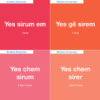
Perhaps the hardest thing for speakers of different Armenian dialects to wrap their heads around, is the grammar differences between Eastern and Western Armenian. For example ‘I am running’ in Eastern Armenian is ‘yes vazum em’. In Western Armenian, it is ‘yes gë vazem’. Verbs also take on different forms between the two dialects, for example ‘to speak’ in Eastern Armenian is ‘khosel’, or in Western Armenian ‘khosil’.
5. Borrowed words in Armenian
Armenian is an Indo-European language and has many borrowed words from other languages. Eastern Armenian speakers, particularly in the diaspora, borrow many words from Farsi, while Western Armenian speakers borrow many words from Arabic.
No matter which Armenian dialect you speak, (or which Armenian dialect you are learning), Armenian is a beautiful language that deserves to be spoken, celebrated, and enjoyed.
If you’re interested in Eastern or Western Armenian, you can try one month for free, at Tun Online Armenian School.
Happy learning!
Should I learn Eastern or Western Armenian?
Deciding whether to learn Eastern or Western Armenian can depend on how you want to use the language, and why you want to learn Armenian in the first place.
If your choice to learn Armenian is based on travel, such as an upcoming visit to Yerevan, or Armenia’s lush travel destinations outside of the city, we’d recommend learning Eastern Armenian. In Armenia, the main languages spoken are Eastern Armenian and Russian.
<>
If you decide to learn Armenian because it is the language of a loved one, such as a romantic partner, grandparent, or dear friend, you will first need to learn which Armenian dialect they speak. If you can find out how they say ‘hello’ in Armenian, you will be well on your way to discovering this! ‘Barev’ means hello in the Eastern Armenian dialect, and ‘parev’ means hello in the Western Armenian dialect. Once you know this, you can then learn the Armenian dialect that is common to both of you, so that you can practice together and communicate in Armenian as you learn.
Suppose you are living outside of Armenia, and want to learn the Armenian language so that you can enjoy Armenian music, movies, books, and comedy. In that case, you may need to learn Eastern Armenian, Western Armenian, or both! Find out which dialect is spoken in the movies and music you want to listen to, and then sign up to a learning platform, like Tun Online Armenian School, which offers both Eastern and Western Armenian language courses. You can even sign up to try one month free.
Can I practice speaking Armenian with the locals?
Even if you only know a little bit of Armenian, the locals in Armenia will very much appreciate you speaking it with them! When you walk into a shop in Yerevan, you will hear the familiar greeting ‘Barev dzez’, meaning ‘hello’, and that’s a great starting point! From here, you can practice saying how are you ‘Vons es’, or telling them something is good ‘Lav’ or very good ‘Shat lav’. We’ve included a brief list below of some common conversational words and phrases that will help you when speaking Armenian:
| English | Eastern Armenian | Western Armenian |
| Hello | Barev dzez | Parev |
| How are you | Vons es | Vons es |
| Good | Lav | Lav |
| Very good | Shat lav | Shad lav |
| Excuse me | Neretsek | Neretsek |
| Please | Khndrem | Khntrem |
| Thank you | Shnorhakalutyun | Shnorhagalutyun |
| Good bye | Tstesutyun | Tsdesutyun |
Here is your premium, fully consistent FAQ section for this post
(aligned with your tone, structure, and depth, and without using “—”):
Frequently Asked Questions
1. What is the difference between Eastern and Western Armenian?
Eastern and Western Armenian are the two main modern forms of the Armenian language. They share the same roots and alphabet but differ in pronunciation, vocabulary, grammar, and certain expressions. Both dialects remain closely connected and are largely understandable to Armenian speakers familiar with each form.
2. Which Armenian dialect is spoken in Armenia?
Eastern Armenian is the official language of the Republic of Armenia and is the dialect most commonly spoken throughout the country today. It is also widely used in Armenian schools, media, and government institutions.
3. Where is Western Armenian spoken?
Western Armenian is primarily spoken throughout the Armenian diaspora, especially in communities across Lebanon, Syria, France, the United States, Canada, Australia, and other countries with large Armenian populations.
4. Can Eastern and Western Armenian speakers understand each other?
In many cases, yes. Speakers can often understand each other, particularly in written form. However, differences in pronunciation, grammar, and vocabulary can sometimes create confusion, especially for beginners or learners with limited exposure to the other dialect.
5. Which Armenian dialect should I learn?
The best choice depends on your goals. If you plan to travel to Armenia or communicate with people living there, Eastern Armenian is usually the best option. If you want to connect with family members or a diaspora community that speaks Western Armenian, then Western Armenian may be the better choice.
6. Are there vocabulary differences between Eastern and Western Armenian?
Yes. While much of the vocabulary is shared, some everyday words differ between the dialects. For example, certain foods, colors, and common objects may have completely different names depending on whether you are speaking Eastern or Western Armenian.
7. Do Eastern and Western Armenian have different grammar rules?
Yes. The overall structure of the language remains similar, but there are noticeable differences in verb forms, sentence construction, and grammatical patterns. These differences become more apparent as learners move beyond beginner-level conversations.
8. Can I learn both Eastern and Western Armenian?
Absolutely. Many learners choose to start with one dialect and later expand their knowledge of the other. At Tun Online Armenian School, students can study either Eastern Armenian, Western Armenian, or both, allowing them to communicate confidently with Armenian speakers around the world.
<>
For more easy Armenian phrases in Eastern and Western Armenian, download the FREE phrasebook from Tun Online Armenian School here, or you can try one month of Armenian lessons for free.
Armenian is a beautiful language, and one that you will enjoy learning and speaking, even if only for a short time while you visit Armenia, and you will find that speaking it with the locals will lead to interactions and create cherished memories of your experience in Armenia.
Related Articles




-
Online Armenian School
438 100 Fr – 938 700 Fr / month -

5 x Armenian Lesson Sample
469 400 Fr -

Armenian English Alphabet Flashcard Set
212 800 Fr -

Armenian Flashcard Set - Animals PRINTABLE
150 200 Fr