
When you want your children to speak Armenian but do not know where to start
The feeling is familiar to Armenian families around the world. You may be a parent who grew up speaking Armenian at home but now finds yourself answering in English because it has become the default. Perhaps you are a parent who never learned Armenian yourself — your family lost the language a generation ago — and you want to give your children something you never received. Or maybe you are a new parent, still navigating the early years, and wondering whether it is too early or too late to introduce Armenian.
The research on bilingual development offers strong encouragement. Children’s brains are remarkably receptive to multiple languages from birth, and the so-called “critical period” — while real — is far more flexible than popular culture suggests. A child who begins learning Armenian at age five, seven or even twelve can still develop strong proficiency, particularly when the language is woven into the emotional fabric of daily family life. The key is not starting at a specific age but creating an environment where Armenian feels natural, useful and connected to love and belonging.
Yet for many parents, the practical question remains unresolved: if you are not a confident Armenian speaker yourself, how do you give the language to your children? You cannot teach what you do not know, and the thought of stumbling through vocabulary lists or grammar rules at the dinner table feels more likely to breed frustration than fluency. The good news — and this is something that language maintenance researchers have documented across diaspora communities worldwide — is that parental fluency is not the decisive factor. What matters far more is the consistent presence of the language in emotionally positive contexts.
What the research says about intergenerational language transmission
Studies of heritage language maintenance across Armenian, Greek, Chinese and other diaspora communities consistently identify a small set of practices that predict whether a language survives into the next generation. The most powerful predictor is not parental fluency but the proportion of meaningful interactions that happen in the target language. In other words, it matters less how well you speak Armenian and more how often Armenian is part of the moments that your children associate with warmth, play, routine and connection.
This finding has profound practical implications. It means that a parent who knows only twenty Armenian phrases — but uses them consistently during bedtime, mealtime or playtime — is doing more for their child’s long-term relationship with the language than a fluent parent who predominantly speaks English at home. Consistency and emotional association, not grammatical perfection, are the engines of heritage language transmission.
A second important finding concerns the role of third-party input. Children who have access to Armenian speakers beyond their parents — grandparents, community members, online teachers, other children who speak Armenian — develop stronger productive skills and are more likely to continue using the language into adolescence and adulthood. This suggests that families should think about Armenian not as something they must provide entirely on their own but as a linguistic ecosystem they can build around their children, drawing on community, technology and structured learning resources.

Why leaving it to weekend school alone rarely works
Many Armenian families place significant hope in community language schools, and these institutions play an invaluable role in cultural preservation. But educational researchers have long observed that one or two hours per week of formal instruction — no matter how excellent — is rarely sufficient to produce functional bilingualism on its own. Language acquisition requires frequency and distribution: short, regular exposures spread across the week produce far stronger learning than a single concentrated session, even when the total number of hours is the same.
Similarly, passive exposure through Armenian television, music or occasional conversations with grandparents, while beneficial, does not typically produce active speaking ability. Children need opportunities to produce the language themselves — to speak, to respond, to be understood — in contexts that feel authentic rather than performative. Without these opportunities, receptive bilingualism may develop (the ability to understand Armenian) without productive ability (the ability to speak it), a pattern that frustrates many Armenian parents and children alike.
How families can create an Armenian-rich home environment
Building Armenian into your family’s daily life does not require a household-wide language policy or dramatic lifestyle changes. It requires small, sustainable decisions that accumulate over years. A morning greeting in Armenian, a bedtime phrase repeated every night, a song sung while cooking together — these micro-interactions, multiplied across childhood, create thousands of hours of meaningful language exposure without anyone feeling they are studying.
At Tun Online Armenian School, students can begin structured Armenian learning from a young age, with interactive lessons, quizzes and games that make the process feel like play rather than schoolwork. When children associate Armenian with colourful, engaging digital activities — exercises they can complete on a tablet or laptop at their own pace — the language acquires the same positive associations as their favourite games and apps.
What works particularly well in a family context is the combination of structured online learning with informal home use. The online programme builds vocabulary, grammar and literacy skills in a systematic way, while the home environment provides the emotional warmth and authentic communication that transforms those skills into a living language. A parent who learns alongside their child — even starting from zero — models the value of Armenian in a way that no external programme can replicate. Children who see their parents prioritising the language are far more likely to internalise it as something worth keeping.
Practical strategies for bringing Armenian into your family's daily routine
- *Start with consistent anchor phrases.** Choose five to ten Armenian phrases — good morning, good night, I love you, thank you, let’s eat — and use them every single day without fail. These become the linguistic bedrock of your family’s Armenian practice, and the repetition ensures that even very young children begin to recognise and eventually produce them.
- *Sing together.** Armenian children’s songs, lullabies and even folk music provide language input that is rhythmically patterned, emotionally warm and easy to remember. You do not need a good singing voice; you just need the willingness to sing. The words stick in memory more readily when carried by melody.
- *Label your world in Armenian.** Place sticky notes with Armenian words on household objects — the door, the fridge, the window, the table — and point them out regularly. This simple technique builds environmental vocabulary without requiring dedicated study time, and it normalises the presence of Armenian script in your home.
- *Read Armenian children’s books aloud.** Even if your own reading is halting, the act of sitting together with an Armenian picture book communicates that this language is worth time and attention. Many families find that illustrated bilingual books, which pair Armenian text with English translations, allow both parent and child to participate regardless of proficiency level.
- *Connect Armenian to things your children already love.** If your child is passionate about cooking, learn Armenian food vocabulary together while preparing a meal. If they love animals, build an Armenian animal word wall. When the language attaches to existing interests, it stops feeling like a separate academic subject and starts feeling like an extension of who your child already is.
Ready to start learning Armenian?
Tun Online Armenian School is available online to students in 30+ countries. Students can log in and learn Eastern or Western Armenian at a pace that suits them, and it features lessons, quizzes and interactive games to make learning fun.

Create your free account and start your first lesson now!
✅ Available on mobile
✅ Available on desktop and laptop
✅ Ad-free learning experience
✅ Live practice with other Armenian speakers
✅ Beginner, Intermediate and Advanced levels
✅ Tutor help available
✅ Try before you buy with 4, 8 or 12 lessons free
✅ Cancel any time

Related Articles


-

Armenian Suffixes Masterclass Series – 11 lessons
$86.00Original price was: $86.00.$86.00Current price is: $86.00. -
Online Armenian School
$51.00 – $109.00 / month -

5 x Armenian Lesson Sample
$55.00Original price was: $55.00.$55.00Current price is: $55.00. -
Armenian Sentence Structure Masterclass Series – 8 lessons
$86.00Original price was: $86.00.$86.00Current price is: $86.00. -
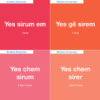
Armenian Past/Present/Future Masterclass Series – 8 lessons
$86.00Original price was: $86.00.$86.00Current price is: $86.00. -

Armenian Reading and Writing Masterclass Series – 14 lessons
$115.00Original price was: $115.00.$115.00Current price is: $115.00. -
Armenian Reading and Writing Workbook Bundle x 3
$54.00Original price was: $54.00.$54.00Current price is: $54.00. -

Armenian English Alphabet Flashcard Set
$25.00Original price was: $25.00.$25.00Current price is: $25.00. -

Armenian Flashcard Set - Animals PRINTABLE
$18.00Original price was: $18.00.$18.00Current price is: $18.00. -

Armenian Flashcard Set - Emotions and Feelings PRINTABLE
$18.00Original price was: $18.00.$18.00Current price is: $18.00.
