When you sit down for your first Armenian coffee
You are invited into someone’s home in Yerevan — a relative you have just met, a friend of a friend, a colleague from the university — and before you can even sit down, the question comes: “Soorj khesi?” Will you drink coffee? What follows is not a quick espresso and a polite goodbye. It is a ritual that can last an hour, sometimes two. The small copper pot called a jazve appears, the fine-ground coffee begins to bubble over a low flame, and the conversation settles in for the long haul. You have just entered one of the most important social institutions in Armenian life, and you will need more than “shnorhakalutyun” to survive it.
Coffee in Armenia is never just coffee. It is the excuse for conversation, the structure around which stories are told, the reason why a ten-minute visit becomes an afternoon. The Armenian word for it — soorj — comes from the Turkish, but the culture around it is distinctly Armenian: unhurried, generous, and built on the assumption that the person in front of you deserves your full attention. Every household has a preferred way of brewing it, every grandmother has opinions about the right strength, and every family has rituals — the reading of the grounds at the bottom of the cup, the patterns that are said to predict the future, the laughter that follows when the fortune is obviously invented on the spot.
If you are learning Armenian, the coffee table is where your language will either live or die. It is where you will be expected to make small talk, to share news, to answer questions about your family, your work, your plans. It is also where Armenians will test you gently — not with exams, but with the kind of warm, rapid conversation that assumes you are one of them. Mastering the language of the soorj table is mastering the language of connection itself.
What makes the language of the coffee table so particular
The Armenian coffee conversation has its own rhythm, its own vocabulary, and its own set of social rules that are rarely taught in textbooks. There are the invitations — “Soorj khesi?” (will you have coffee?), “Arakel, arakel” (come in, come in, said with the warmth that means the invitation is genuine), “Mi ham yek” (come for a moment — a phrase that in reality means plan to stay). There are the polite refusals that do not actually mean no — “Chem uzum anhasat li lini” is softened by the ritual of asking again. There are the phrases of hospitality: “Khosirek hayeren, chech” (speak Armenian, please — said half as a joke, half as a genuine request), “Inch enk? Patrast elav?” and the constant refilling of cups that is its own form of conversation.
The register of coffee-table Armenian is warm, colloquial, and full of diminutives that signal affection. You will hear shortened verb forms, family nicknames, and expressions that do not appear in formal grammar books. The word for grandmother — “tatik” — becomes “tatik-jan” with the affectionate suffix that Armenian speakers add to almost any noun when they care about it. You will hear “jan” appended to your own name constantly — “Anna-jan”, “David-jan” — and it is not a term of endearment reserved for romance. It is the linguistic equivalent of a warm hand on your shoulder.
There is also the matter of the grounds. When the cup is nearly finished, an Armenian will often tip it onto the saucer, let the thick sludge of grounds form patterns, and invite someone to read them. This is not science, and everyone knows it, but the ritual is real: it gives the gathering a shape, a moment of focus, a reason to linger. And it gives the learner something priceless — a predictable, repeated conversational structure in which the same phrases appear again and again, until they become automatic.
Why learning vocabulary alone will not save you at the coffee table
Many learners prepare for Armenian hospitality the wrong way. They memorise lists of food words and polite phrases, then find themselves frozen when the actual conversation begins — not because they lack vocabulary, but because they lack the social scripts that tell them what to say when. The phrasebook teaches you how to order a coffee in a café. It does not teach you how to gracefully accept a third cup you do not want, how to compliment the hostess without sounding rehearsed, or how to tell a story about your own family when asked — and you will be asked.
The deeper problem is that coffee-table Armenian is spoken at natural speed, with laughter, interruptions, and the kind of overlapping talk that is the signature of any lively family gathering. Learners who have only studied written Armenian often report that they can read the newspaper but cannot follow a single exchange at the table. The gap is not vocabulary — it is ear training. The brain needs hundreds of hours of listening to informal Armenian before the stream of speech resolves into recognisable words, and no textbook can shortcut that process.
What makes it worse is the emotional pressure. When the whole table turns to you and waits for your story, the fear of making a mistake feels enormous — and yet this is exactly the moment when Armenians are most forgiving and most encouraging. The laughter you will hear when you make a grammatical error is almost never mockery. It is delight. An Armenian relative who hears you try the language at the coffee table will retell that moment for months, not because it was funny, but because it mattered.
How Tun builds the skills the coffee table demands
At Tun Online Armenian School, students can develop exactly the listening comprehension and colloquial vocabulary that informal gatherings require. The interactive lessons introduce everyday expressions in context — the invitations, the refusals, the small talk — rather than as isolated words on a page, and the native-speaker audio recordings train the ear for the speed and rhythm of real conversation. When you have heard “soorj khesi?” said by a native speaker a dozen times, your brain begins to recognise it instantly in the real world.
The platform’s quizzes and spaced repetition keep the high-frequency phrases of hospitality in your long-term memory, so they surface automatically when you need them. And because Tun offers both Eastern and Western Armenian, learners can focus on the conversational style of their own family or destination — the Yerevan coffee table has a different rhythm from the Beirut or Los Angeles one, and both are available. The result is a learner who arrives at the table ready to listen, not just to speak.

Practical strategies for mastering coffee-table Armenian
Start by learning the ten phrases that appear in almost every Armenian coffee gathering: the offer, the acceptance, the graceful refusal, the compliment to the cook or hostess, the toast, the question about family, the phrase for “a little more, please”, the exclamation of pleasure after the first sip, and the goodbye that promises to do this again soon. Practise them aloud until they feel automatic — the goal is to deploy them without mental translation, because conversation will not wait for you to think.
Train your ear with dialogue-based listening before you arrive. Find recordings or videos of Armenian family conversations — meals, coffee gatherings, long telephone calls — and listen repeatedly, first for gist, then for the specific phrases you have learned. The single most effective preparation for a coffee-table conversation is hearing what a real one sounds like, because the same expressions recur again and again, and each repetition makes the next one easier to catch.
Learn to tell one story about yourself in Armenian. It does not need to be long or dramatic — where you are from, what you do, how you came to learn Armenian, whether you have family in Armenia. Practise it until it flows. At the coffee table, you will be asked, and the person who asks genuinely wants to hear the answer. A prepared story gives you a bridge across the first five minutes of nervousness, after which the conversation tends to carry itself.
Finally, embrace the ritual itself. Accept the second cup. Let the grounds be read. Laugh at the invented fortune. The language of Armenian coffee is not only in the words — it is in the willingness to stay, to listen, to share. The learner who understands that will find the Armenian language opening itself to them in ways that no grammar book ever could.
Frequently Asked Questions
1. What does “soorj khesi?” mean, and how should I respond?
It literally means “will you drink coffee?” It is a hospitality ritual rather than a real either-or question, so the expected answer is usually a warm yes, even if you only plan to sip a little.
2. How long does a typical Armenian coffee gathering last?
Anywhere from thirty minutes to two hours. The coffee itself brews in minutes, but the conversation is the real point, so it helps to arrive without anywhere else to be.
3. What is “jan” and why do people add it to names?
“Jan” is an affectionate suffix added to names and nouns to show warmth, similar to calling someone “dear.” Hearing “Anna-jan” does not signal romance, it signals closeness.
4. Is reading coffee grounds a real Armenian tradition?
Yes, it is a well-known ritual where the grounds left in the cup are read for playful “fortunes.” It is treated as fun rather than serious fortune-telling.
5. Why can I read Armenian newspapers but not follow table conversation?
Written and spoken Armenian differ in speed, informality, and vocabulary. Coffee-table Armenian is fast, colloquial, and full of interruptions that written text does not prepare you for.
6. What is the best way to prepare for my first Armenian family coffee visit?
Learn ten common hospitality phrases, prepare one short personal story, and listen to real family conversations so the rhythm feels familiar before you arrive.
7. Do I need to accept every cup of coffee I am offered?
Not necessarily, but a polite refusal is usually repeated once or twice before it is accepted, since offering again is part of the ritual of hospitality.
8. Does Tun teach Eastern or Western Armenian for this kind of conversation?
Both. Since coffee-table rhythms differ between Yerevan and diaspora communities like Beirut or Los Angeles, Tun lets you focus on the version that matches your own family or destination.
Ready to start learning Armenian?
Tun Online Armenian School is available online to students in 30+ countries. Students can log in and learn Eastern or Western Armenian at a pace that suits them, and it features lessons, quizzes and interactive games to make learning fun.

Create your free account and start your first lesson now!
✅ Available on mobile
✅ Available on desktop and laptop
✅ Ad-free learning experience
✅ Live practice with other Armenian speakers
✅ Beginner, Intermediate and Advanced levels
✅ Tutor help available
✅ Try before you buy with 4, 8 or 12 lessons free
✅ Cancel any time

Related Articles





-

Armenian Suffixes Masterclass Series – 11 lessons
75 514,00 Kz -
Online Armenian School
44 797,00 Kz – 95 992,00 Kz / month -

5 x Armenian Lesson Sample
47 996,00 Kz -
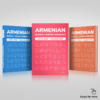
Armenian Reading and Writing Workbook Bundle x 3
47 356,00 Kz -

Armenian English Alphabet Flashcard Set
21 759,00 Kz -

Armenian Flashcard Set - Animals PRINTABLE
15 359,00 Kz