When you need to write in Armenian and the blank page stares back
You have been learning Armenian — reading, speaking, listening — and then the moment arrives. A formal email to an institution in Yerevan. A letter to a relative’s workplace. A message to an Armenian-speaking client, a university, a community organisation. And suddenly the conversational skills that serve you so well in speech feel insufficient. The blank page is waiting, and you are not sure how the formal register works — how to open, how to close, how to show respect in a language whose written formalities you have never studied.
Formal written Armenian is a specific skill, and it matters more than learners expect. In Armenian culture, the written word carries weight: the formal letter, the official request, the respectful email are judged by their tone as much as their content. Getting the register right signals respect; getting it wrong signals carelessness — or worse, disrespect. The learner who can write formally has a skill that opens doors: applications, requests, introductions, and the correspondence that life in the Armenian world requires.
The good news is that formal Armenian writing follows clear, learnable conventions. The salutations, the forms of address, the formulaic openers and closers are a finite set, and they can be mastered. The formal register is not harder than the spoken language — it is different, and different is learnable.
The architecture of the formal Armenian letter
Formal Armenian writing has a structure that is more fixed than English formal writing. The salutation — “Hargarkel: …” (Dear, literally with respect), “Paron” for a man, “Tikin” for a woman, “Sireli” (dear) in softer contexts — opens the letter and sets the register. The forms of address matter: “Paron Petrosyan” (Mr Petrosyan), “Tikin Grigoryan” (Ms Grigoryan), and the respectful additions like “Hargarkel em dzez” (I address you with respect) that mark the formal tone.
The body follows its own conventions. Formal Armenian is more elaborate than conversational Armenian: the sentences are longer, the vocabulary is more careful, and the politeness formulas — “Khndrum em” (I request), “Khndrem” (please, formal), “Nerum ek” (please forgive) — carry the respect that the register demands. The verb forms shift to the formal “you” — “dzez” — with its full conjugations, and the learner must master the formal address to write correctly.
The closing is as important as the opening. “Hargarkov” (with respect) or “Hargarkov ev uzhenov” (with respect and regards) precedes the signature; the formulas of gratitude — “Shnorhakal em” (I am grateful), “Nakhapes shnorhakal em” (I am most grateful) — round out the courtesy. The full structure — salutation, formulaic opening, respectful body, grateful closing — is the skeleton of every formal Armenian document, from the email to the application to the official letter.
Why the formal register matters beyond the office
The formal register is not only for business. It is the register of respect in Armenian life, and it appears in settings that have nothing to do with work: the letter to the church, the message to the elderly relative you address formally, the written request to the community organisation, the congratulations sent to the family. In Armenian culture, the written word is a public face, and the formal register is how the face shows respect.
For learners in the diaspora, the formal register has a particular weight. The community institutions — the churches, the schools, the cultural organisations — run on formal written Armenian: the announcements, the letters, the requests, the records. The learner who can write formally can participate in the community’s written life, not just its spoken life. And the learner who can write to Armenia — the university, the institution, the official body — has a tool that distance would otherwise make impossible.
There is also the listening side of the register. Formal Armenian is heard in announcements, speeches, and official occasions; the learner who has studied the written formalities can follow the spoken ones. The two are the same language with different faces, and mastering the written face illuminates the spoken one.
How Tun builds your written foundation
At Tun Online Armenian School, students can build the grammar, vocabulary, and sentence structures that formal writing requires. The structured curriculum develops the core grammar — the verb forms, the sentence construction, the vocabulary of respect — that the formal register draws on, and the interactive exercises build the writing skills through practice, not just recognition. The platform’s approach means the learner arrives at formal writing with the foundation already in place — the formal register becomes an extension of the language they already know, not a separate mystery.
The combination of Tun’s structured learning with deliberate practice in formal writing — drafting emails, studying sample letters, having writing corrected — is the complete path. The platform builds the foundation; the practice builds the craft; the craft opens the doors.

Practical strategies for mastering formal writing
Study the formulas as a set. The formal register runs on a finite set of fixed phrases — the salutations, the openers (“Hargarkel em dzez, vor…” — I address you with respect to…), the politeness markers (“Khndrem”, “Nerum ek”), the closers (“Hargarkov”, “Shnorhakal em”). Learn these as a system, with examples, and you have the skeleton of every formal document you will ever write. The formulas are the 80 per cent; the content is the rest.
Collect sample letters. Find examples of formal Armenian letters — the announcements, the applications, the official correspondence published online — and study their structure. Note the salutations, the transitions, the closings. A folder of ten good samples is a reference library for your own writing, and the samples teach the conventions faster than any description.
Practise with the appropriate register. When you write — an email, a message, a note — consciously choose the register: formal for institutions and elders, informal for friends and equals. The practice of choosing builds the awareness of the register, and the awareness is the skill. The learner who can switch registers at will has command of the language’s social grammar.
Finally, have your writing corrected by a native speaker. The formal register is where subtle errors matter most, and the feedback of a native speaker — a tutor, a colleague, a community contact — is the fastest path to mastery. Offer your draft, accept the corrections, and learn the patterns of your own mistakes. The corrected letter is the best textbook you will ever own — it is your own language, improved by the people who own it.
Frequently Asked Questions
1. How is formal written Armenian different from casual conversation?
Formal writing uses more careful grammar, respectful phrasing, and set structural conventions that differ noticeably from casual spoken Armenian.
2. What is the typical structure of a formal Armenian email or letter?
Formal Armenian correspondence generally follows conventions for greeting, purpose, respectful closing, and appropriate register throughout the message.
3. Why does formal writing matter beyond just office communication?
Formal register is also expected in official requests, community correspondence, and respectful communication with elders or institutions.
4. What common mistakes do learners make in formal Armenian writing?
Using overly casual phrasing or direct translations from English, which can come across as abrupt or inappropriate in a formal context.
5. How can I learn appropriate greetings and closings for formal letters?
Studying real example emails or letters is one of the most effective ways to absorb natural formal phrasing and structure.
6. Is formal Armenian writing different between Eastern and Western varieties?
Yes, formal conventions can differ somewhat, so it helps to model your writing on examples from the variety relevant to your recipient.
7. Do I need advanced grammar to write a passable formal email?
A solid grasp of basic grammar plus a few set formal phrases can go a long way, even before mastering more advanced structures.
8. How does Tun help learners build formal writing skills?
Tun builds the grammar and vocabulary foundation, including respectful phrasing, that supports confident formal writing over time.
Ready to start learning Armenian?
Tun Online Armenian School is available online to students in 30+ countries. Students can log in and learn Eastern or Western Armenian at a pace that suits them, and it features lessons, quizzes and interactive games to make learning fun.

Create your free account and start your first lesson now!
✅ Available on mobile
✅ Available on desktop and laptop
✅ Ad-free learning experience
✅ Live practice with other Armenian speakers
✅ Beginner, Intermediate and Advanced levels
✅ Tutor help available
✅ Try before you buy with 4, 8 or 12 lessons free
✅ Cancel any time

Related Articles





-

Armenian Suffixes Masterclass Series – 11 lessons
26 578,00 Ft -
Online Armenian School
15 767,00 Ft – 33 785,00 Ft / month -

5 x Armenian Lesson Sample
16 893,00 Ft -
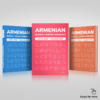
Armenian Reading and Writing Workbook Bundle x 3
16 668,00 Ft -

Armenian English Alphabet Flashcard Set
7 658,00 Ft -

Armenian Flashcard Set - Animals PRINTABLE
5 406,00 Ft