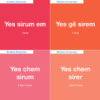
When You Open an Armenian Grammar Book and Your Heart Sinks
You have learned the alphabet. You have built a starter vocabulary. You can say barev dzez with confidence and ask how much something costs. And then you encounter an Armenian grammar table — seven cases, multiple declensions, verb conjugations that seem to multiply in every direction, and a word order that does not behave the way English does — and suddenly the language feels less like a bridge to your heritage and more like an insurmountable wall.
This reaction is completely normal. English and Armenian are both Indo-European languages, which means they share a very distant common ancestor, but they evolved along separate paths for thousands of years. The structures that feel obvious in English — subject-verb-object order, minimal case marking, reliance on auxiliary verbs — are not universal features of language. They are the specific choices English made. Armenian made different choices, and those choices can feel foreign not because they are illogical but because they are unfamiliar.
The good news is that the unfamiliar becomes familiar with exposure and practice. And more importantly, Armenian grammar is internally consistent in ways that, once understood, make it considerably more learnable than it first appears.
The Logic Behind Armenian Grammar
The feature that most intimidates English-speaking learners is the case system. Armenian nouns change form depending on their role in the sentence — whether they are the subject, the direct object, the possessor, or other functions. English does this only with pronouns (I becomes me becomes my), so the idea of doing it for every noun feels overwhelming.
But consider this: you already understand case intuitively. When you say “I gave the book to Maria,” you know that I is the giver, the book is what was given, and Maria is the recipient — not because of word endings but because of word order and prepositions. Armenian just marks these roles differently, with suffixes rather than position and prepositions. Once you learn the patterns — and there are only seven cases, with regular endings for most nouns — the system becomes a tool rather than an obstacle.
The verb system, too, follows a logic that rewards systematic study. Armenian verbs conjugate for person, number, tense, and mood, and they have a two-stem system (present and past) from which most forms can be derived. If this sounds abstract, think of it this way: English has irregular verbs like sing-sang-sung and go-went-gone. Armenian has its own patterns, but they are actually more regular than English in many respects — once you know a verb’s two stems, you can predict most of its forms.
Why Grammar-Heavy Approaches Alone Can Backfire
Some learners, faced with the complexity of Armenian grammar, respond by trying to master the rules before attempting to speak. This is understandable but usually counterproductive. Language acquisition research consistently shows that explicit grammar knowledge supports but does not replace implicit knowledge — the intuitive sense of what sounds right that comes from massive exposure and practice.
A learner who has memorised every declension table but has never heard Armenian spoken naturally will struggle to produce fluent speech, because the brain has not had enough input to internalise the patterns. Conversely, a learner who has had substantial exposure to spoken and written Armenian, even without formal grammar study, will often produce correct forms without knowing why they are correct.
The most effective approach combines both: clear explanations that make the patterns visible, followed by abundant practice that makes them automatic. Grammar should illuminate the language, not intimidate the learner.
How Clear Instruction Builds Confidence
What transforms grammar from a barrier into a bridge is presentation. When a new structure is introduced in isolation, without context, it feels arbitrary — just another thing to memorise. When it is introduced as the answer to a question the learner already has — “how do I say this happened in the past?” or “how do I show that this belongs to someone?” — it becomes useful immediately.
At Tun Online Armenian School, students can progress through a sequenced curriculum that introduces grammatical concepts gradually, always in the context of practical communication. Each new structure is explained clearly, demonstrated with examples, and then practised through interactive exercises that build confidence before moving forward. This approach respects both the complexity of Armenian grammar and the learner’s capacity to master it when given the right support.

Practical Strategies for Mastering Armenian Grammar
Focus on one grammatical feature at a time. Trying to internalise the entire case system in a single study session is a recipe for frustration. Spend a week noticing and practising the accusative case — the form used for direct objects — before moving on to the genitive. Your brain needs time to consolidate each pattern before layering on the next.
Read Armenian that is slightly above your current level. When you encounter a grammatical structure in a meaningful sentence, your brain processes it differently than when it appears in an isolated exercise. You begin to associate certain endings with certain functions automatically, the same way you learned English grammar as a child — through exposure, not explanation.
Practise producing language daily, even with imperfect grammar. Write two sentences. Say one thing aloud. The goal at the beginning is communication, not grammatical perfection. Errors are not failures — they are evidence that your brain is testing hypotheses about how the language works, which is exactly what it should be doing.
Look for patterns that connect to what you know. Armenian postpositions — words like mej, inside, and vra, on, that come after the noun — function similarly to English prepositions, just in a different position. Recognising these structural parallels reduces the feeling that you are learning something entirely alien and helps the brain integrate new patterns with existing knowledge.
Ready to start learning Armenian?
Tun Online Armenian School is available online to students in 30+ countries. Students can log in and learn Eastern or Western Armenian at a pace that suits them, and it features lessons, quizzes and interactive games to make learning fun.

Create your free account and start your first lesson now!
✅ Available on mobile
✅ Available on desktop and laptop
✅ Ad-free learning experience
✅ Live practice with other Armenian speakers
✅ Beginner, Intermediate and Advanced levels
✅ Tutor help available
✅ Try before you buy with 4, 8 or 12 lessons free
✅ Cancel any time

Related Articles





-
Online Armenian School
590 400 UZS – 1 265 000 UZS / month -

5 x Armenian Lesson Sample
632 500 UZS -
Armenian Reading and Writing Workbook Bundle x 3
624 100 UZS -

Armenian English Alphabet Flashcard Set
286 800 UZS -

Armenian Flashcard Set - Animals PRINTABLE
202 400 UZS