

The First Decision New Learners Face
Before you begin your first lesson, before you learn your first word, you will encounter a question that Armenian learners face in a way that learners of most other languages do not: which Armenian are you learning?
This question catches many people off guard. They knew that Armenian existed; they did not necessarily know that it comes in two distinct modern forms — Eastern and Western — that share a script and a grammatical foundation but differ enough in pronunciation, vocabulary, and cultural context to be genuinely distinct experiences as languages. A native speaker of Eastern Armenian visiting a Western Armenian community will generally be understood, but the differences will be audible and, in some cases, significant enough to require adjustment.
Choosing the right variant is not a trivial decision. The resources available to you, the community you connect with, the content you engage with, and the conversations you will eventually be able to participate in all depend on which form you are learning. Understanding the key factors helps you make this choice with confidence rather than by guessing.
The Clearest Guide: Follow Your Heritage and Community
For most learners with Armenian heritage, the choice is straightforward once you know where your family’s Armenian roots lie.
If your heritage is from the Republic of Armenia — your family came from Soviet Armenia or post-independence Armenia — or from Iranian Armenian communities, Eastern Armenian is your variant. Eastern Armenian is the official language of the Republic of Armenia, the form taught in Armenian schools, and the form heard in contemporary Armenian media, film, and music. Choosing Eastern Armenian connects you to the living culture of Armenia today.
If your heritage is from the Middle Eastern diaspora — Lebanese, Syrian, Egyptian, or Turkish Armenian families — or from the established diaspora communities in the United States, France, Australia, Argentina, or Brazil that trace their roots to the post-Genocide diaspora, Western Armenian is almost certainly the form your family spoke. Western Armenian is the language of the Lebanese-Armenian cultural tradition, of the diaspora press, and of the community organisations that preserved Armenian culture outside the Soviet sphere.
Many learners fall into a third category: they have mixed heritage, or their family’s spoken Armenian was already partially lost by the time they came to it, or they genuinely have no preference and are approaching Armenian as a language of cultural interest rather than direct heritage. For these learners, the secondary factors become more important.

Secondary Factors When Heritage Doesn't Decide It
- *Speaker population and resources.** Eastern Armenian has more speakers overall — approximately five million in Armenia alone, with additional speakers in Russia, Iran, and other former Soviet states. This means more freely available media content, more contemporary digital resources, and more speakers available for conversation practice globally. If immersive exposure through contemporary media is important to you, Eastern Armenian has a practical advantage.
- *Community connection.** Western Armenian has fewer speakers but carries a particular cultural weight as the form that survived displacement and diaspora. If you are learning to connect with a specific diaspora community — Lebanese-Armenian, French-Armenian, or Armenian-American — Western Armenian is almost certainly the form that community uses.
- *Linguistic comparison.** The two forms are mutually intelligible in writing and share most vocabulary and grammar. Learning either form gives you a substantial head start toward the other, and many learners eventually develop some familiarity with both. The differences in pronunciation are the most immediately noticeable — certain consonants that are voiced in Western Armenian are voiceless in Eastern and vice versa — but these differences are learnable.
What Both Forms Share
It is worth remembering, in the middle of this decision, what Eastern and Western Armenian share: the same thirty-eight-letter alphabet, a common grammatical architecture, thousands of shared vocabulary items, and a continuous cultural tradition stretching back over sixteen hundred years. Learning either form opens the door to the same script, the same history, and the same cultural heritage. The question of which form to learn is real and worth answering thoughtfully — but it is not a decision about whether to access Armenian culture. Both forms offer that access in full.
At Tun Online Armenian School, both Eastern and Western Armenian are available at every level, taught with equal depth and quality. Whichever form matches your background, your community, and your goals, the learning path is there.
Frequently Asked Questions
- *How different is the pronunciation between Eastern and Western Armenian?**
The most significant pronunciation difference is in the consonant system: several consonants that are voiced in Western Armenian (including sounds like “b” and “g”) are voiceless in Eastern Armenian, and vice versa. This means the same written letter can represent a different sound in each variant. The vowel systems are broadly similar. Speakers of one variant find the other recognisable but distinctly different to the ear.
- *If I learn Eastern Armenian, can I later learn Western Armenian easily?**
Yes. The shared alphabet, grammatical structure, and the majority of vocabulary mean that learning the second variant is significantly faster than learning from scratch. The main areas requiring deliberate study are the consonant pronunciation differences and the specific vocabulary that differs between the two forms. Most learners estimate the transition takes months rather than years.
- *Which variant of Armenian is used in most Armenian diaspora churches?**
The Armenian Apostolic Church liturgy uses Classical Armenian (Grabar), which is distinct from both modern variants but is more closely related to Western Armenian in its phonological tradition. Diaspora churches rooted in the Middle Eastern diaspora (Lebanese, Syrian, Turkish-Armenian communities) typically use Western Armenian in sermons and community life. Churches serving communities from Armenia use Eastern Armenian.
- *Does the Armenian Orthodox Church use Eastern or Western Armenian?**
The Armenian Apostolic Church uses Classical Armenian (Grabar) for its liturgy, which predates both modern variants. In practice, different dioceses of the church use either Eastern or Western Armenian for preaching, administration, and community life, depending on the background of their congregation. The Holy See of Etchmiadzin in Armenia uses Eastern Armenian; the Catholicosate of Cilicia, based in Lebanon, uses Western Armenian.
- *Can I learn both Eastern and Western Armenian at the same time?**
Learning both simultaneously from scratch is not generally recommended, because the pronunciation differences can cause confusion at the beginner stage. It is more efficient to reach a solid foundation in one variant before developing familiarity with the other. However, learners who already have a foundation in one often find it natural to begin exploring the other once the first is established — at which point comparison between the two becomes an interesting learning tool rather than a source of confusion.
Ready to start learning Armenian?
Tun Online Armenian School is available online to students in 30+ countries. Students can log in and learn Eastern or Western Armenian at a pace that suits them, and it features lessons, quizzes and interactive games to make learning fun.

Create your free account and start your first lesson now!
✅ Available on mobile
✅ Available on desktop and laptop
✅ Ad-free learning experience
✅ Live practice with other Armenian speakers
✅ Beginner, Intermediate and Advanced levels
✅ Tutor help available
✅ Try before you buy with 4, 8 or 12 lessons free
✅ Cancel any time

Related Articles





-

Armenian Suffixes Masterclass Series – 11 lessons
$85.00Original price was: $85.00.$85.00Current price is: $85.00. -
Online Armenian School
$51.00 – $108.00 / month -

5 x Armenian Lesson Sample
$54.00Original price was: $54.00.$54.00Current price is: $54.00. -

Armenian Sentence Structure Masterclass Series – 8 lessons
$85.00Original price was: $85.00.$85.00Current price is: $85.00. -
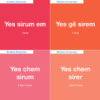
Armenian Past/Present/Future Masterclass Series – 8 lessons
$85.00Original price was: $85.00.$85.00Current price is: $85.00. -

Armenian Reading and Writing Masterclass Series – 14 lessons
$114.00Original price was: $114.00.$114.00Current price is: $114.00. -
Armenian Reading and Writing Workbook Bundle x 3
$54.00Original price was: $54.00.$54.00Current price is: $54.00. -

Armenian English Alphabet Flashcard Set
$25.00Original price was: $25.00.$25.00Current price is: $25.00. -

Armenian Flashcard Set - Animals PRINTABLE
$18.00Original price was: $18.00.$18.00Current price is: $18.00. -

Armenian Flashcard Set - Emotions and Feelings PRINTABLE
$18.00Original price was: $18.00.$18.00Current price is: $18.00.
