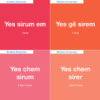
When the Words Get Stuck in Your Throat
You know more Armenian than you let on. You can read a few words, you understand a phrase here and there, and when someone speaks to you in Armenian, your brain registers something — a familiar sound, a half-remembered word from childhood. But when it’s your turn to speak, everything disappears. Your mouth opens and nothing comes out, or what comes out sounds so different from what you intended that you feel embarrassed and pull back.
This is one of the most common experiences among Armenian learners around the world, and it is especially familiar to heritage speakers — people who grew up hearing Armenian at home but never felt fully confident using it themselves. The fear of getting it wrong, of sounding strange, of being corrected in front of family members, is enough to keep people silent for years. Sometimes decades. And the longer the silence goes on, the harder it feels to break it.
The good news is that speaking confidence is not something you either have or you don’t. It is a skill, and like any skill, it develops through the right kind of practice.
Why Speaking Feels So Different From Studying
Reading Armenian, learning vocabulary, completing exercises — these activities happen in your own head, on your own schedule, at your own pace. Speaking is different. It is real-time, unrehearsed, and visible. There is no time to look something up or think too carefully about grammar. This is why many learners who have spent months studying can still freeze the moment someone says “Բարև, ինչպե՞ս ես” (Hello, how are you?) and expects an answer within a few seconds.
The gap between passive knowledge and active speaking ability is real in any language, and Armenian adds a few extra layers of complexity. Whether you are learning Eastern or Western Armenian, the phonology includes sounds that don’t exist in English — consonant clusters, specific vowel qualities, and a rhythm that takes time to internalize. This is not a reason to avoid speaking; it is simply a reason to understand that speaking practice is its own discipline, separate from grammar study or vocabulary building.
Active recall under time pressure — which is essentially what conversation is — requires a different kind of training. The more you practise producing Armenian in real time, the more natural that production becomes, even if individual attempts feel clumsy at first.
Why Memorising Scripts Doesn't Build Real Confidence
A common approach is to memorise set phrases — “My name is…”, “I would like…”, “Where is the…” — and use these as a foundation. This works to a point, but it creates a fragile kind of fluency. The moment the conversation veers off-script, learners hit a wall. Real speaking confidence requires the ability to improvise, to reformulate, to express a thought you have never explicitly practised before.
Similarly, many people wait until their Armenian is “good enough” before attempting to speak with native speakers. But the threshold for “good enough” keeps moving. There is no level of study that automatically produces speaking confidence. That confidence only comes from speaking — from making mistakes, noticing them, adjusting, and trying again. The willingness to be a beginner in front of other people is one of the most underrated skills in language learning.
How Structured Practice Builds Speaking From the Ground Up
At Tun Online Armenian School, students work through lessons that build speaking ability gradually and deliberately, starting with pronunciation and moving toward real conversational exchange. The platform includes live practice sessions with other Armenian speakers around the world, which means students get the experience of actual spoken exchange in a supportive environment — not the high-stakes pressure of an unexpected family conversation.
This kind of structured speaking practice makes an enormous difference. Rather than hoping confidence will appear eventually, the learning pathway creates consistent opportunities to use Armenian out loud — in quizzes, in interactive exercises, and in live sessions where a tutor is available to guide pronunciation and encourage natural expression. Tutor support means learners have someone to help them work through specific speaking blocks rather than carrying them silently for months.
Practical Habits That Build Speaking Confidence Over Time
Talking to yourself in Armenian is one of the most underused and most effective practices available. Narrating what you are doing, describing objects around you, or thinking through the events of your day in Armenian activates your speaking ability without any audience pressure. It sounds simple because it is — and it works.
Recording yourself speaking Armenian and listening back is uncomfortable at first, but it gives you information that pure study never can. You will hear where you are hesitating, where your pronunciation differs from what you intended, and — importantly — where you are actually doing better than you thought. Many learners are their own harshest critics and are genuinely surprised by how much they can already say.
Finding a regular speaking partner or joining a language exchange community removes the isolation from learning and creates the kind of low-pressure social practice that builds real-world confidence. Even ten minutes of spoken Armenian conversation each week compounds significantly over months. Progress in speaking is not linear — there are plateaus and breakthroughs — but consistent spoken practice is the only thing that moves you forward. The goal is not to speak perfectly. The goal is to speak.

Frequently Asked Questions
- *Is it normal to understand Armenian but struggle to speak it?**
Yes — this is called the production gap and it is extremely common. Passive skills like listening and reading develop faster than active speaking. The only way to close the gap is through regular speaking practice, even if it feels uncomfortable at first.
- *How long does it take to feel confident speaking Armenian?**
Most learners notice a meaningful improvement in speaking confidence within three to six months of consistent daily practice. The key is quantity of speaking output — more spoken practice, even imperfect, produces faster gains than waiting until your Armenian feels “ready.”
- *Can I improve my Armenian speaking confidence without a conversation partner?**
Yes. Narrating your day, reading aloud, and recording yourself speaking Armenian are all effective solo practices. However, live conversation with other speakers accelerates confidence development significantly, because it replicates the time pressure and social feedback of real communication.
- *What types of mistakes should I not worry about when speaking Armenian?**
Grammar errors, imperfect pronunciation, and mixing in English words when vocabulary runs out are all normal at every stage of learning. They do not prevent communication and they correct themselves naturally with exposure and practice. The mistakes worth addressing are those that genuinely block comprehension — and even those are best fixed through practice, not through avoiding speaking altogether.
- *How do live practice sessions help with building Armenian speaking confidence?**
Live practice creates the same social and time pressure as real conversation — the need to respond, to be understood, and to understand in return — in a structured, supportive environment. The experience of successfully communicating in Armenian with another person is one of the most powerful confidence builders available, and it cannot be replicated by solo study alone.
Ready to start learning Armenian?
Tun Online Armenian School is available online to students in 30+ countries. Students can log in and learn Eastern or Western Armenian at a pace that suits them, and it features lessons, quizzes and interactive games to make learning fun.

Create your free account and start your first lesson now!
✅ Available on mobile
✅ Available on desktop and laptop
✅ Ad-free learning experience
✅ Live practice with other Armenian speakers
✅ Beginner, Intermediate and Advanced levels
✅ Tutor help available
✅ Try before you buy with 4, 8 or 12 lessons free
✅ Cancel any time

Related Articles





-

Armenian Suffixes Masterclass Series – 11 lessons
194 044,00 Fr -
Online Armenian School
115 111,00 Fr – 246 667,00 Fr / month -

5 x Armenian Lesson Sample
123 334,00 Fr -
Armenian Reading and Writing Workbook Bundle x 3
121 689,00 Fr -

Armenian English Alphabet Flashcard Set
55 911,00 Fr -

Armenian Flashcard Set - Animals PRINTABLE
39 467,00 Fr