
Meaning Changes Even When Words Stay the Same
One of the more subtle and important challenges in learning Armenian is realising that meaning does not always change through vocabulary. The same phrase can carry a genuinely different feeling depending entirely on how it is delivered. A sentence may sound warm and inviting in one moment and noticeably distant in another. It may feel reassuring in one context and neutral in the next. These shifts are not caused by any change in the words themselves but by emotional contrast in tone and delivery. For learners who are primarily focused on vocabulary, this can create genuine confusion: you recognise every word but still feel uncertain about what is truly being communicated.
Emotional Contrast as a Layer of Structure
In Armenian, emotional contrast is not an added decorative layer over a complete grammatical message. It is part of how meaning is fundamentally structured. Tone, pacing, and emphasis work together to shape interpretation in ways that cannot always be inferred from the literal content of what is said. A slight softening of the voice can signal care and closeness. A firmer delivery can signal clarity, distance, or seriousness. Even small variations in rhythm can change how a message lands with the listener. This means that understanding Armenian fully requires attention to the differences in how things are said, not only to the content of what is said.

Why Learners Often Miss These Differences
In the early stages of learning, most attention necessarily goes to words and basic structure. Learners focus on recognising vocabulary and building basic comprehension, which is important but also narrows perception in a way that can persist longer than it should. When attention is fixed on words, subtle emotional shifts in tone are frequently missed. This creates a gap in understanding that becomes more noticeable over time, particularly when learners encounter real conversations and find that knowing the words is not always enough to know what is truly being communicated.
Learning to Hear the Shift, Not Just the Sentence
As exposure to Armenian increases, learners gradually begin to pick up on these tonal contrasts more naturally and more consistently. You start to notice when something feels softer, more direct, more distant, or more emotionally engaged. This awareness does not develop through memorisation or through explicit study of tone as a concept. It develops through attentive listening and through the kind of repeated exposure that allows you to compare how similar phrases feel across different situations. These comparisons accumulate over time into a genuine sensitivity to emotional variation.
Understanding Lives in the Differences
Armenian becomes clearer when you stop expecting meaning to stay fixed across all contexts and instead begin to look for contrast. How does tone change between two uses of the same phrase? How does delivery shift when the emotional register is different? How does the same structure feel in a warm, familiar setting compared to a more formal one? These differences are not small details at the margins of communication. They are where the full meaning of Armenian becomes visible, and attending to them is what separates functional comprehension from genuinely deep understanding.
Frequently Asked Questions
1. What is emotional contrast in Armenian communication?
Emotional contrast refers to the way meaning in Armenian can change based on tone, pacing, emphasis, and delivery, even when the words themselves remain the same. These subtle variations help convey intention, emotion, and context, making them an essential component of accurate understanding and natural communication.
2. Why can the same Armenian phrase have different meanings?
The emotional tone of a sentence can significantly influence its interpretation. A phrase may sound warm, reassuring, distant, or serious depending on how it is spoken. These differences are shaped by vocal delivery rather than vocabulary, which is why learners must pay attention to both what is said and how it is expressed.
3. Why do learners often miss emotional contrasts in Armenian?
In the early stages of learning, most learners focus primarily on vocabulary and grammar. While this foundation is important, it can limit awareness of tonal and emotional nuances. As a result, learners may understand the literal meaning of a sentence but still feel uncertain about the speaker’s intention.
4. How can learners develop sensitivity to emotional contrast in Armenian?
Sensitivity to emotional contrast develops through attentive and repeated listening to authentic Armenian speech. Engaging with conversations, films, podcasts, and real-life interactions allows learners to compare how similar phrases are delivered across different emotional contexts, gradually building intuitive understanding.
5. How does emotional contrast influence Armenian pronunciation and listening skills?
Emotional contrast shapes pronunciation through variations in intonation, rhythm, and emphasis. Recognising these shifts enhances listening comprehension and enables learners to interpret meaning more accurately. It also helps learners produce speech that sounds more natural and emotionally aligned with native communication.
6. Can emotional contrast be learned through memorisation?
No, emotional contrast cannot be effectively learned through memorisation alone. It develops organically through exposure and experience. By consistently listening to authentic Armenian and observing how tone changes across contexts, learners gradually internalise these nuances.
7. What are the signs that I am beginning to recognise emotional contrast in Armenian?
Signs include noticing differences in tone between similar phrases, understanding the emotional intention behind statements, responding more appropriately in conversations, and feeling more confident interpreting subtle shifts in meaning. These indicators reflect deeper comprehension beyond vocabulary.
8. How does Tun Armenian Online School support learning through emotional contrast?
Tun Armenian Online School integrates authentic listening experiences and conversational practice into its curriculum. By exposing learners to varied emotional contexts and encouraging attentive listening, the program helps students develop sensitivity to tonal nuances, leading to more accurate and meaningful communication.

Ready to start learning Armenian?(www.tunapp.com/get-started)
Tun Online Armenian School is available online to students in 30+ countries. Students can log in and learn Eastern or Western Armenian at a pace that suits them, and it features lessons, quizzes and interactive games to make learning fun.
<< Create your free account and start your first lesson now! >>
✅ Eastern and Western Armenian
✅ Available on mobile
✅ Available on desktop and laptop
✅ Ad-free learning experience
✅ Live practice with other Armenian speakers
✅ Beginner, Intermediate and Advanced levels
✅ Tutor help available
✅ Try before you buy with 4, 8 or 12 lessons free
✅ Cancel any time

Related Articles



-

Armenian Suffixes Masterclass Series – 11 lessons
$85.00Original price was: $85.00.$85.00Current price is: $85.00. -

Online Armenian School
$51.00 – $108.00 / month -

5 x Armenian Lesson Sample
$54.00Original price was: $54.00.$54.00Current price is: $54.00. -
Armenian Sentence Structure Masterclass Series – 8 lessons
$85.00Original price was: $85.00.$85.00Current price is: $85.00. -
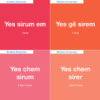
Armenian Past/Present/Future Masterclass Series – 8 lessons
$85.00Original price was: $85.00.$85.00Current price is: $85.00. -

Armenian Reading and Writing Masterclass Series – 14 lessons
$114.00Original price was: $114.00.$114.00Current price is: $114.00. -
Armenian Reading and Writing Workbook Bundle x 3
$54.00Original price was: $54.00.$54.00Current price is: $54.00. -

Armenian English Alphabet Flashcard Set
$25.00Original price was: $25.00.$25.00Current price is: $25.00. -

Armenian Flashcard Set - Animals PRINTABLE
$18.00Original price was: $18.00.$18.00Current price is: $18.00. -

Armenian Flashcard Set - Emotions and Feelings PRINTABLE
$18.00Original price was: $18.00.$18.00Current price is: $18.00.
