

Short Conversations Create Real Progress
Many learners imagine that conversation practice needs to involve long discussions. They wait until they know enough vocabulary or grammar to speak for several minutes without stopping. This expectation can make speaking Armenian feel more difficult than it needs to be.
Short conversations can be equally valuable, especially during the early stages of learning. A simple greeting, a question about someone’s day, or a brief exchange about food gives learners an opportunity to turn passive knowledge into active communication. These small interactions are easier to repeat regularly, and repetition gradually makes Armenian feel more familiar.
Speaking Regularly Matters More Than Speaking for Hours
Language skills develop through frequent use. One long conversation occasionally can be useful, but short conversations repeated throughout the week provide consistent opportunities to recall vocabulary and practise sentence patterns.
Each interaction asks your brain to retrieve Armenian in real time. The more often this happens, the easier familiar expressions become to access. Over time, learners spend less energy searching for basic words and more attention understanding and responding to the conversation.
Simple Conversations Strengthen Useful Vocabulary
Everyday conversations naturally repeat common vocabulary. Greetings, questions, polite expressions, and responses appear frequently because they are essential parts of communication.
This repetition is helpful for learners. Instead of constantly studying new words, you strengthen the vocabulary you are most likely to use. Familiar expressions gradually become reliable tools that can support longer conversations later.
Short Practice Reduces Speaking Pressure
Long conversations can feel intimidating when learners are still developing confidence. Short interactions create smaller, more manageable challenges.
Knowing that you only need to exchange a few sentences can reduce anxiety and encourage you to participate more often. Each successful interaction becomes evidence that you can communicate in Armenian, even when your vocabulary is still developing.
Why TunApp Supports Practical Conversation Practice
At Tun Armenian Online School, communication skills are developed gradually. Learners encounter practical phrases and sentence structures that can be applied to everyday conversations rather than waiting until they have mastered every grammar concept.
TunApp helps learners build familiarity through repeated exposure so that speaking becomes an extension of what they already recognise and understand.
Learning Tip: Create a Five-Minute Armenian Routine
Set aside five minutes each day for spoken Armenian. Ask and answer simple questions about your day, describe what you are doing, or practise a familiar dialogue aloud.
Do not worry about creating complicated sentences. The purpose is to make speaking a regular part of your routine. As familiar expressions become easier, gradually introduce new vocabulary and longer responses.
Small Conversations Lead to Bigger Ones
Fluency does not begin with complicated discussions. It begins with simple exchanges that gradually become easier and more flexible.
Every short Armenian conversation strengthens your ability to recognise, recall, and use the language. Over time, a few comfortable sentences can grow into longer conversations without the transition feeling overwhelming.
Frequently Asked Questions
1. Can short conversations really improve my Armenian?
Yes. Short conversations provide regular opportunities to practise vocabulary, pronunciation, listening, and sentence formation.
2. How long should Armenian conversation practice be?
Even five to ten minutes can be useful when practice happens consistently.
3. What should beginners talk about in Armenian?
Start with familiar topics such as greetings, family, food, daily routines, hobbies, and plans.
4. What if I do not have someone to practise Armenian with?
You can practise aloud independently by answering questions, describing your surroundings, or repeating dialogues from lessons.
5. Should I correct every mistake during conversation practice?
Not necessarily. Focus on communicating first, then review recurring mistakes afterwards.
6. How does TunApp support Armenian conversation skills?
TunApp introduces practical language through realistic contexts and repeated exposure, helping learners prepare for everyday communication.
7. When should I start having longer conversations?
Gradually extend conversations when short exchanges begin to feel comfortable and familiar.
Ready to start learning Armenian?
Tun Online Armenian School is available online to students in 30+ countries. Students can log in and learn Eastern or Western Armenian at a pace that suits them, and it features lessons, quizzes and interactive games to make learning fun.

Create your free account and start your first lesson now!
✅ Available on mobile
✅ Available on desktop and laptop
✅ Ad-free learning experience
✅ Live practice with other Armenian speakers
✅ Beginner, Intermediate and Advanced levels
✅ Tutor help available
✅ Try before you buy with 4, 8 or 12 lessons free
✅ Cancel any time

Related Articles





-

Armenian Suffixes Masterclass Series – 11 lessons
$82.00Original price was: $82.00.$82.00Current price is: $82.00. -
Online Armenian School
$49.00 – $104.00 / month -

5 x Armenian Lesson Sample
$52.00Original price was: $52.00.$52.00Current price is: $52.00. -

Armenian Sentence Structure Masterclass Series – 8 lessons
$82.00Original price was: $82.00.$82.00Current price is: $82.00. -
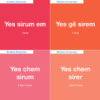
Armenian Past/Present/Future Masterclass Series – 8 lessons
$82.00Original price was: $82.00.$82.00Current price is: $82.00. -

Armenian Reading and Writing Masterclass Series – 14 lessons
$110.00Original price was: $110.00.$110.00Current price is: $110.00. -
Armenian Reading and Writing Workbook Bundle x 3
$52.00Original price was: $52.00.$52.00Current price is: $52.00. -

Armenian English Alphabet Flashcard Set
$24.00Original price was: $24.00.$24.00Current price is: $24.00. -

Armenian Flashcard Set - Animals PRINTABLE
$17.00Original price was: $17.00.$17.00Current price is: $17.00. -

Armenian Flashcard Set - Emotions and Feelings PRINTABLE
$17.00Original price was: $17.00.$17.00Current price is: $17.00.
