Dialects as Living History
Every language that has existed for centuries across a wide geographic area develops dialects, regional varieties that reflect different histories, different contact with other languages, and different social and cultural conditions. Armenian is no exception. In fact, Armenian dialect diversity is extraordinary given the relatively small size of the Armenian-speaking population, and it reflects the remarkable geographic spread of Armenian communities across the Caucasus, Anatolia, the Middle East, and the diaspora over many centuries.
Dialects are not corruptions or deviations from some pure standard form of the language. They are living expressions of the communities that speak them, carrying within them the traces of local history, contact with neighbouring languages, and the particular experiences of the people who developed them. For the Armenian learner, understanding something about this dialect landscape is not just an intellectual exercise. It is a way of understanding the full human story that the language tells.
The Major Dialect Groups
Armenian dialects are traditionally grouped into several major regional varieties. The dialects of historic Armenia, including those of the Van, Mush, Karin, and other regions of eastern Anatolia, are largely spoken today only by descendants of communities displaced by the Armenian Genocide, and many are in danger of extinction. The dialects of the Caucasus region, including those associated with what is now the Republic of Armenia and surrounding areas, form the basis of modern Eastern Armenian. The dialects of Iranian Armenian communities have their own distinctive features, as do those of the Lebanese, Syrian, and other Middle Eastern Armenian communities.
Western Armenian, the variety that developed among diaspora communities primarily after the Genocide, is itself a kind of lingua franca among diaspora Armenians, representing a standardisation across different regional backgrounds. Understanding that both Eastern and Western Armenian are themselves standardised forms that grew out of diverse dialect backgrounds helps learners appreciate the full complexity of the language they are studying.

Food as Social Vocabulary
Perhaps even more importWhat Dialect Differences Sound Like
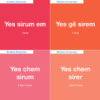
For learners who have primarily encountered one variety of Armenian, encountering a different dialect for the first time can be a surprising experience. The phonology may be noticeably different, with sounds produced in different places or with different qualities. Vocabulary may differ in ways that make some words unfamiliar. Grammatical patterns may vary in ways that require adjustment.
This experience can be initially unsettling but becomes much less so with awareness and exposure. Knowing in advance that dialect variation exists and that it does not represent error or deviation from a standard prepares learners to encounter variation with curiosity rather than confusion. And exposure to a range of Armenian voices, even passively, builds the kind of phonological flexibility that makes the learner a more robust and adaptable listener.
Dialects and Identity
For many Armenian speakers, their dialect is an important part of their cultural and family identity. Communities that maintain a particular dialect are often doing so as an act of cultural preservation, as a way of keeping alive a connection to a specific place and time that would otherwise be lost. When you encounter an Armenian speaker who uses features of a particular regional dialect, you are encountering someone whose language carries specific history, and that specificity deserves recognition and respect.
For heritage learners in particular, the dialect question can be emotionally complex. If your family comes from a particular Armenian community, the variety of Armenian you may have heard at home is not just language. It is a specific cultural inheritance. Recognising the value of that inheritance alongside the practical benefits of learning a standardised variety is part of the nuanced approach that genuine Armenian language learning requires.
TunApp and Dialect Awareness
At Tun Armenian Online School, learners are introduced to the context of Armenian dialect diversity in a way that informs without overwhelming. The primary focus is on developing competence in a standard variety while building awareness of the broader linguistic landscape. This balanced approach ensures that learners are not caught off guard by dialect variation when they encounter it in the real Armenian-speaking world, and that they approach that variation with the cultural sensitivity it deserves.
Learning Tip: Listen to Multiple Armenian Voices
As part of your Armenian listening practice, deliberately seek out speakers from different backgrounds and communities. Notice differences in pronunciation, vocabulary, and rhythm. Do not try to analyse or categorise everything you hear. Simply expose your ear to variety. Over time, this exposure builds a more flexible and sophisticated listener who can navigate the full range of Armenian speech rather than being confined to the particular variety they first learned.
The Richness in the Variation
The dialects of Armenian are a form of living cultural memory. They carry within them the histories of communities, the traces of landscapes, the echoes of experiences that no other kind of historical record preserves. When you encounter dialect variation in Armenian, you are touching this living history. That is not a complication. It is a privilege.
Frequently Asked Questions
1. What is the difference between Eastern and Western Armenian?
Eastern Armenian is the standardised variety spoken in the Republic of Armenia and forms the basis of formal instruction in most contemporary language programmes. Western Armenian developed primarily among diaspora communities, particularly following the Armenian Genocide, and is maintained by diaspora Armenians worldwide. Both are standardised forms that grew out of diverse regional dialects, and while mutually intelligible in many respects, they differ in vocabulary, pronunciation, and some grammatical features.
2. Are Armenian dialects very different from standard Armenian?
Some regional dialects differ significantly from standardised varieties in phonology, vocabulary, and grammatical patterns, while others are closer to the standard. For learners who have primarily encountered one variety, hearing a different dialect for the first time can be surprising. Knowing in advance that variation exists and that it represents living history rather than error prepares learners to encounter it with curiosity rather than confusion.
3. Should I learn Eastern or Western Armenian first?
The most practical choice depends on your reasons for learning and the community you are most connected to. Eastern Armenian is the variety of the Republic of Armenia and is the primary focus of most contemporary learning programmes. Western Armenian is the variety of diaspora communities, particularly those with roots in historic western Armenia. If you have a specific community connection, that connection is the most meaningful guide.
4. Why do so many Armenian dialects exist?
Armenian has been spoken across a wide geographic area for many centuries, including the Caucasus, Anatolia, and the Middle East, with each region developing its own variety under different historical, social, and linguistic contact conditions. This geographic and historical spread produced an extraordinary diversity of dialects, many of which carry within them traces of landscapes, communities, and experiences that no other historical record preserves.
5. Are some Armenian dialects endangered?
Yes. Many dialects associated with communities displaced by the Armenian Genocide, including those of the Van, Mush, and Karin regions of historic Anatolia, are now spoken only by descendants of those communities and are at serious risk of extinction. Awareness of this among learners who have family connections to specific regional communities can add urgency and meaning to heritage language study.
6. How should I respond when I encounter an Armenian dialect I do not recognise?
Approaching unfamiliar dialect features with curiosity rather than confusion is both linguistically productive and culturally respectful. Asking a speaker about the origin of a particular expression or form often opens a conversation about community history and identity that deepens your cultural understanding significantly. Dialect variation is information about the human story behind the language, not a problem to be solved.
7. How can I train my ear to understand different varieties of Armenian?
Deliberately seeking out speakers from different backgrounds and communities as part of your listening practice builds the phonological flexibility that understanding dialect variation requires. You do not need to analyse everything you hear. Simply exposing your ear to a range of Armenian voices over time develops the kind of adaptable listening that allows you to navigate the full breadth of Armenian speech.

Ready to start learning Armenian?(www.tunapp.com/get-started)
Tun Online Armenian School is available online to students in 30+ countries. Students can log in and learn Eastern or Western Armenian at a pace that suits them, and it features lessons, quizzes and interactive games to make learning fun.
<< Create your free account and start your first lesson now! >>
✅ Eastern and Western Armenian
✅ Available on mobile
✅ Available on desktop and laptop
✅ Ad-free learning experience
✅ Live practice with other Armenian speakers
✅ Beginner, Intermediate and Advanced levels
✅ Tutor help available
✅ Try before you buy with 4, 8 or 12 lessons free
✅ Cancel any time

Related Articles





-

Armenian Suffixes Masterclass Series – 11 lessons
7.524.700 ل.ل -
Online Armenian School
4.463.900 ل.ل – 9.565.300 ل.ل / month -

5 x Armenian Lesson Sample
4.782.700 ل.ل -

Armenian Reading and Writing Masterclass Series – 14 lessons
10.075.500 ل.ل -
Armenian Reading and Writing Workbook Bundle x 3
4.718.900 ل.ل -

Armenian English Alphabet Flashcard Set
2.168.200 ل.ل -

Armenian Flashcard Set - Animals PRINTABLE
1.530.500 ل.ل -

Armenian Flashcard Set - Emotions and Feelings PRINTABLE
1.530.500 ل.ل