

When "I want to learn Armenian" meets "…so what do I actually do first?"
Deciding to learn Armenian is a meaningful moment. It might come from a desire to speak with grandparents in their own language, a connection to Armenian heritage you want to explore, or simply an appreciation for one of the world’s oldest continuous literary traditions. But the moment of decision is often followed, almost immediately, by a wall of uncertainty. What do you learn first? The alphabet? Greetings? Grammar? How do you fit it into a life that is already busy? And how do you know if you are even making progress?
This is the beginner’s paradox: you have enough motivation to start but not enough knowledge to build a plan. Without a clear path, many learners drift between disconnected resources — a YouTube video here, a vocabulary app there, an outdated textbook from the library — and after a few weeks, they feel they have not moved forward at all. The frustration is real, and it has nothing to do with your ability to learn languages. It has everything to do with not having a roadmap.
What most beginners need is not more motivation, more discipline or more willpower. They need a sequence — a logical order of steps that respects how language acquisition actually works and that delivers small, tangible wins early enough to sustain momentum. Armenian is a language with its own script, its own grammatical structures and its own rhythm, but none of these things make it impossible to learn. They just mean the order in which you learn things matters more than it does for a language closely related to one you already know.
What the beginning of the Armenian language journey actually looks like
A well-structured Armenian learning journey starts with the alphabet — but not the way most people imagine. You do not need to learn all 38 letters perfectly before you learn your first word. A better approach introduces letters in small groups alongside simple vocabulary, so that from day one you are connecting sounds to shapes to meanings. Within the first week, you should be able to read and write words like “բարև” (hello) and “այո” (yes), even if your handwriting is messy and you still pause to remember which letter is which.
From there, the path moves naturally to greetings, introductions and basic sentence patterns. Armenian word order is flexible but tends toward subject-object-verb, and early exposure to this structure — through phrases like “Ես հայերեն եմ սովորում” (I am learning Armenian) — builds a grammatical intuition that will serve you through every subsequent stage. Vocabulary expands outward from high-frequency, personally relevant words: family members, foods, daily activities, numbers, colours. These are the words you will use most often, so they deserve the most early attention.
What surprises many beginners is how quickly the pieces start to connect. The first time you recognise a word in a song or a social media post, the first time you form a sentence without translating it word-for-word in your head, the first time you understand a short spoken phrase — these moments arrive sooner than you expect, and each one is a genuine milestone. Progress in Armenian, as in any language, is not linear. Some weeks feel like breakthroughs; others feel like plateaus. Both are normal, and both are part of the process.
Why generic language apps were not built for Armenian
Most popular language-learning platforms are designed for the world’s largest languages — Spanish, French, German, Japanese — and their teaching methods assume certain things that are not true for Armenian. They assume the alphabet is either Latin or already familiar to the learner. They assume an enormous corpus of readily available media for immersion. And they assume a learner base large enough to justify continuous investment in course quality.
Armenian, for all its richness and history, does not fit these assumptions. The resources that do exist are often inconsistent in quality, unclear about which branch of Armenian they teach, or structured in ways that mimic a university textbook rather than supporting the way a motivated adult actually learns a language in 2026. The result is that beginners waste time and confidence navigating a landscape that was never designed with them in mind. This is not a reflection on the language; it is a reflection on the market.

How Tun structures the beginner path from lesson one
At Tun Online Armenian School, students can begin their journey with a structured curriculum that introduces the alphabet, pronunciation and core vocabulary in an integrated, interactive format. The lessons are designed so that each new piece of knowledge builds on the one before it, and you are never asked to memorise something in isolation that you will not use immediately afterward. Lessons are short enough to complete in a busy schedule — typically 15 to 20 minutes each — and they include quizzes and games that reinforce what you have learned without feeling like drills.
The platform also gives you flexibility. You can learn Eastern or Western Armenian, you can set your own pace, and you can revisit any lesson as many times as you need. Progress is tracked clearly, so you can see exactly how far you have come, even on days when it feels like you are standing still. And because the programme includes opportunities for live practice with other Armenian speakers, you are not learning in a vacuum — you are learning to communicate with real people, which is, after all, the whole point.
A beginner's roadmap: five steps that actually work
First, commit to 15 to 20 minutes of Armenian every day rather than two hours once a week. Language acquisition thrives on frequency, not intensity. Your brain consolidates new information during the hours between sessions, and daily exposure — even brief exposure — creates the repetition your memory needs.
Second, learn the alphabet by using it, not by memorising it as an abstract chart. Write words by hand, read words aloud, and connect each letter to the sound it makes as you encounter it in real vocabulary. The shape of a letter sticks when it is attached to a meaning.
Third, prioritise high-frequency words and phrases. You do not need to know the Armenian word for “philosophy” before you know how to say “please,” “thank you” and “I would like.” Everyday language is your foundation; everything else can be layered on top of it.
Fourth, listen to Armenian every day, even if you understand almost nothing at first. Music, podcasts, news broadcasts, YouTube videos — the goal is not comprehension at this stage, it is exposure. Your brain is quietly mapping the rhythm, intonation and sound patterns of the language, and this passive work makes active learning much easier later.
Fifth, produce the language as early as possible. Say words out loud. Write short sentences. Send a voice message to a language partner. Speaking and writing are skills, not just knowledge, and skills develop through doing. You will make mistakes — that is how you learn. The speakers you practise with will almost always be patient, supportive and genuinely pleased that you are making the effort.
Ready to start learning Armenian?
Tun Online Armenian School is available online to students in 30+ countries. Students can log in and learn Eastern or Western Armenian at a pace that suits them, and it features lessons, quizzes and interactive games to make learning fun.

Create your free account and start your first lesson now!
✅ Available on mobile
✅ Available on desktop and laptop
✅ Ad-free learning experience
✅ Live practice with other Armenian speakers
✅ Beginner, Intermediate and Advanced levels
✅ Tutor help available
✅ Try before you buy with 4, 8 or 12 lessons free
✅ Cancel any time

Related Articles


-

Armenian Suffixes Masterclass Series – 11 lessons
$85.00Original price was: $85.00.$85.00Current price is: $85.00. -
Online Armenian School
$51.00 – $108.00 / month -

5 x Armenian Lesson Sample
$54.00Original price was: $54.00.$54.00Current price is: $54.00. -
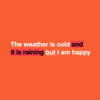
Armenian Sentence Structure Masterclass Series – 8 lessons
$85.00Original price was: $85.00.$85.00Current price is: $85.00. -
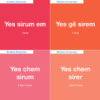
Armenian Past/Present/Future Masterclass Series – 8 lessons
$85.00Original price was: $85.00.$85.00Current price is: $85.00. -

Armenian Reading and Writing Masterclass Series – 14 lessons
$114.00Original price was: $114.00.$114.00Current price is: $114.00. -
Armenian Reading and Writing Workbook Bundle x 3
$54.00Original price was: $54.00.$54.00Current price is: $54.00. -

Armenian English Alphabet Flashcard Set
$25.00Original price was: $25.00.$25.00Current price is: $25.00. -

Armenian Flashcard Set - Animals PRINTABLE
$18.00Original price was: $18.00.$18.00Current price is: $18.00. -

Armenian Flashcard Set - Emotions and Feelings PRINTABLE
$18.00Original price was: $18.00.$18.00Current price is: $18.00.
