

When Basic Literacy Isn't Enough Anymore
There is a satisfying moment early in Armenian literacy development when the alphabet clicks into place and you can read your first simple words and sentences. That moment is real and worth celebrating. But it is also, for many learners, followed by a plateau — a period in which reading feels effortful, writing feels slow, and the gap between what you can technically decode and what you can fluently process seems stubbornly wide.
This intermediate plateau in literacy development is entirely normal and is not a sign that progress has stopped. It is a sign that the easy gains of initial acquisition have been made, and that the deeper work of building true fluency — automaticity, fluency, comprehension without conscious effort — is now the task at hand. This work takes longer and feels less dramatic than the early breakthroughs, but it is where the most meaningful literacy development happens.
For learners who have cleared the beginner stage and are looking to develop genuinely fluent reading and comfortable writing in Armenian, the strategies that worked at the beginning need to evolve.
What Fluent Reading and Writing Actually Requires
Fluent reading in any language is not the same as the ability to decode — to look at each letter, identify the sound it represents, and assemble sounds into words. Fluency is automatic recognition of whole words and common patterns without conscious letter-by-letter processing. This automaticity develops only through volume: reading large amounts of text at a level that is challenging but comprehensible.
Research on reading development in additional languages consistently shows that extensive reading — reading large amounts of text in the target language, even material that is slightly below the learner’s maximum challenge level — produces faster fluency gains than intensive reading of small amounts of difficult text. This is counterintuitive for learners who have been trained to approach texts analytically, but the mechanism makes sense: automaticity develops through practice at speed, not through effortful analysis.
Writing fluency follows a similar pattern. The ability to write Armenian sentences without stopping to recall letter forms, without hesitating over spelling, without consciously constructing each grammatical element — this develops through volume of writing practice, not through occasional careful composition.

The Challenge of Armenian Orthography
Armenian spelling, while considerably more predictable than English, does have specific areas where learners need guidance. The distinction between certain vowel sounds that are represented by different letters, the spelling of borrowed words, and the differences between Eastern and Western Armenian spelling conventions — these require attention and cannot always be inferred from pronunciation alone.
Western Armenian has some specific orthographic conventions that differ from Eastern Armenian, particularly around verb forms and some borrowed vocabulary. Learners of Western Armenian who have been exposed to Eastern Armenian text, or vice versa, may encounter unexpected spelling variations that are confusing without explanation. Understanding that the two variants genuinely differ in spelling, not just pronunciation, is important context for intermediate learners.
Classical Armenian (Grabar), which appears in liturgical contexts and in some formal writing traditions, uses additional letter forms and grammatical structures that differ from modern Armenian. Learners who encounter Grabar — in church contexts, in traditional inscriptions, or in classical literature — benefit from knowing that this is a separate linguistic layer rather than an error or variation in modern Armenian.
How to Move From Functional to Fluent Literacy
Read Armenian content that genuinely interests you, at a level that is challenging but not frustrating. Armenian-language newspapers, websites, blogs, and social media exist and provide real material for reading practice. Armenian children’s books — which offer controlled vocabulary in a rich cultural context — are an underused resource for learners at the intermediate stage.
At Tun Online Armenian School, lesson content at intermediate and advanced levels provides reading material that develops both comprehension and stylistic awareness — an understanding of how Armenian prose and dialogue actually sounds, rather than the simplified constructions of beginner material. The platform’s structured progression means intermediate learners receive content calibrated to their level, avoiding the frustration of material that is too simple and the discouragement of material that is too difficult.
For writing development, keeping a journal in Armenian — even short entries, even imperfect ones — provides exactly the kind of regular, purposeful writing practice that builds fluency. Trying to compose texts from memory, rather than copying or translating, forces retrieval of the grammatical and spelling patterns that need to become automatic. Reviewing earlier writing periodically is also valuable: the errors that were invisible at the time become apparent with a few weeks of additional learning, which makes the progress visible and the patterns of error available for correction.
Frequently Asked Questions
- *What Armenian reading material is appropriate for intermediate learners?**
Armenian children’s books offer controlled vocabulary in a culturally rich context and are an excellent bridge for intermediate learners. Armenian-language news websites, lifestyle blogs, and social media accounts provide contemporary language at a more natural register. Graded readers designed for Armenian learners, where available, offer material calibrated specifically to learner levels.
- *How does Western Armenian spelling differ from Eastern Armenian?**
The two variants use the same alphabet, but some spelling conventions differ, particularly in verb forms and words that were borrowed or developed independently in each tradition. Eastern Armenian spelling reflects the norms standardised in Soviet Armenia; Western Armenian preserved earlier conventions or developed its own based on the diaspora communities’ linguistic evolution. Learners of one variant encountering the other will notice some unfamiliar spellings.
- *How do I improve my Armenian writing accuracy and speed?**
Write in Armenian regularly — even brief daily journal entries — and prioritise composition from memory over copying or translating. Regular writing from memory forces retrieval of spelling and grammatical patterns, which consolidates them more effectively than passive recognition. Reviewing earlier writing periodically reveals patterns of error that can be targeted for correction.
- *How do I know when I am ready to move from beginner to intermediate Armenian reading?**
A reliable indicator is that you can read beginner-level material — simple sentences, basic dialogue, controlled vocabulary texts — without stopping to decode individual letters or look up more than one or two words per paragraph. When reading feels effortful because of vocabulary and grammar rather than because of the script itself, you have crossed the threshold into intermediate reading development.
- *What is the difference between reading Armenian for comprehension and reading for fluency?**
Intensive reading — working carefully through a text, looking up unknown words, analysing grammar — builds comprehension and vocabulary but does not develop reading speed or automaticity. Extensive reading — reading large quantities of slightly easier material without stopping for every unknown word — builds the pattern recognition that produces automatic, fluent reading. Both are valuable, and a balanced reading diet includes both approaches.
Ready to start learning Armenian?
Tun Online Armenian School is available online to students in 30+ countries. Students can log in and learn Eastern or Western Armenian at a pace that suits them, and it features lessons, quizzes and interactive games to make learning fun.

Create your free account and start your first lesson now!
✅ Available on mobile
✅ Available on desktop and laptop
✅ Ad-free learning experience
✅ Live practice with other Armenian speakers
✅ Beginner, Intermediate and Advanced levels
✅ Tutor help available
✅ Try before you buy with 4, 8 or 12 lessons free
✅ Cancel any time

Related Articles





-

Armenian Suffixes Masterclass Series – 11 lessons
$85.00Original price was: $85.00.$85.00Current price is: $85.00. -
Online Armenian School
$51.00 – $108.00 / month -

5 x Armenian Lesson Sample
$54.00Original price was: $54.00.$54.00Current price is: $54.00. -

Armenian Sentence Structure Masterclass Series – 8 lessons
$85.00Original price was: $85.00.$85.00Current price is: $85.00. -
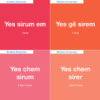
Armenian Past/Present/Future Masterclass Series – 8 lessons
$85.00Original price was: $85.00.$85.00Current price is: $85.00. -

Armenian Reading and Writing Masterclass Series – 14 lessons
$114.00Original price was: $114.00.$114.00Current price is: $114.00. -
Armenian Reading and Writing Workbook Bundle x 3
$54.00Original price was: $54.00.$54.00Current price is: $54.00. -

Armenian English Alphabet Flashcard Set
$25.00Original price was: $25.00.$25.00Current price is: $25.00. -

Armenian Flashcard Set - Animals PRINTABLE
$18.00Original price was: $18.00.$18.00Current price is: $18.00. -

Armenian Flashcard Set - Emotions and Feelings PRINTABLE
$18.00Original price was: $18.00.$18.00Current price is: $18.00.
