Bigger Than One Person
When you decide to learn Armenian, the immediate motivation is personal. A grandparent you want to speak with more freely. A heritage you feel responsible for. A culture you find beautiful. A language that catches you in ways you cannot fully explain. These are real and sufficient reasons. They do not need to be grand.
But there is a larger context around that personal decision that is worth understanding — not as a source of pressure, but as a source of meaning. The survival of a language is not managed by any single institution or government programme. It is the cumulative result of individual choices made by thousands of people across generations. Every person who decides to learn Armenian adds to the living weight of a language that has survived extraordinary historical odds. Every person who teaches it to a child, who uses it in conversation when they could switch to English, who reads and writes in it when other options are available — each of these acts contributes to something that extends far beyond any single life.
This is especially true of Western Armenian, which exists primarily in diaspora and has no state infrastructure to sustain it. Its survival depends entirely on the choices of communities and individuals who value it enough to maintain it.
How Languages Actually Die — and How They Survive
The death of a language is rarely dramatic. Languages do not disappear in a single event. They fade through the gradual accumulation of moments when the language was not chosen — when a parent defaulted to English because it was easier, when a community organisation stopped offering Armenian-language programming, when a young person decided the effort of learning was not worth the benefit, when a generation passed without passing the language to the next.
This process is reversible at any point as long as there are people who choose the language. Language communities have been rebuilt from smaller speaker populations than Armenian’s current diaspora. The key is that enough people — not all people, but enough — maintain active use of the language in domains that matter: in homes, in education, in cultural life, in digital spaces.
The internet has changed the calculus significantly. Languages that in previous generations required physical community density to survive can now be sustained through distributed, connected communities of speakers and learners who maintain their relationship with the language online. This is not the same as a thriving physical community, but it is a genuine form of language maintenance that previous generations did not have access to.
What Individual Learners Actually Contribute
Learning Armenian changes your relationship with Armenian speakers — primarily in your own family and community. When a grandchild learns Armenian, conversations that were previously conducted in half-translation become fully accessible. Relationships that were mediated by language barriers become more direct, more honest, more whole. This is a small act with enormous personal consequences, and those consequences ripple outward in ways that are difficult to predict.
When enough people in a diaspora community learn Armenian, critical mass changes. Armenian becomes a language that can be overheard, that appears in unexpected contexts, that young people encounter as something alive rather than something ceremonial. This critical mass is not reached by any single learner — but it is built from the contribution of each one.
At Tun Online Armenian School, students learning from more than thirty countries are part of a global community of Armenian learners who are, collectively, keeping the language alive in digital space. Each person who completes a lesson, practises in a live session, and carries their Armenian into conversations with family is contributing to something real.

How to Make Your Learning Count Beyond Yourself
Use your Armenian with the people in your life who will be moved by it. The grandparent who did not think you would ever speak to them in Armenian. The family gathering where switching to Armenian at key moments signals that the language belongs to your generation too. These moments matter beyond their immediate warmth.
Encourage others. When someone in your community expresses a desire to learn Armenian, share your experience. Normalise the idea that adults can learn it, that imperfect Armenian is still Armenian, that beginning is worthwhile. The social norms around language learning are as important as the technical resources for it.
Teach what you know. You do not need to be fluent to share Armenian words, songs, or phrases with a child or a curious friend. Every point of contact with the language is a point of contact that might develop into something more. Languages survive not through perfect preservation but through continuous, imperfect transmission — generation to generation, person to person, choice by choice.
Frequently Asked Questions
- *Why is language transmission so challenging in diaspora communities?**
The dominant language of the surrounding society is reinforced in schools, workplaces, peer relationships, and media, which creates an unequal competition for children’s linguistic attention. Without deliberate effort — structured instruction, community support, and use of the heritage language at home — the dominant language gradually displaces the heritage language across generations. This is the standard trajectory for diaspora languages without active maintenance.
- *How does speaking Armenian at home affect the next generation?**
Research on heritage language development is consistent: the home is the most powerful environment for heritage language acquisition. Children who regularly hear Armenian at home develop significantly stronger receptive competence, which creates a much easier path to active fluency later. Even imperfect, mixed-language Armenian at home is more valuable for the next generation than no Armenian at all.
- *What role do online communities play in Armenian language survival?**
Online communities allow a globally distributed diaspora to maintain the social density of language use that was previously only possible in physical communities. Armenian learners and speakers who have no Armenian neighbours, schools, or community centres nearby can now connect with thousands of others who share their language and their goals. This distributed community is a genuinely new factor in the survival prospects of diaspora languages.
- *Are there Armenian language schools in the diaspora?**
Yes. Armenian Saturday schools and Armenian day schools exist in many major diaspora cities — including Los Angeles, Beirut, Paris, Sydney, Buenos Aires, and others — typically run by Armenian community organisations or the Armenian Apostolic Church. These institutions have been central to language transmission for generations. Online learning platforms now extend the reach of structured Armenian instruction to learners in communities where no physical school exists.
- *How do I find an Armenian community to practise with if I do not live near one?**
Online platforms with live practice sessions are the most reliable option for learners without nearby Armenian communities. Armenian diaspora organisations often have online presence and virtual events. Social media groups focused on Armenian language learning connect learners globally. Armenian cultural events — even virtual ones — provide community contact points. The geographical constraint that previously made diaspora Armenian learning difficult has been substantially reduced by digital tools.
Ready to start learning Armenian?
Tun Online Armenian School is available online to students in 30+ countries. Students can log in and learn Eastern or Western Armenian at a pace that suits them, and it features lessons, quizzes and interactive games to make learning fun.

Create your free account and start your first lesson now!
✅ Available on mobile
✅ Available on desktop and laptop
✅ Ad-free learning experience
✅ Live practice with other Armenian speakers
✅ Beginner, Intermediate and Advanced levels
✅ Tutor help available
✅ Try before you buy with 4, 8 or 12 lessons free
✅ Cancel any time

Related Articles

-
Online Armenian School
22 277,00 ₸ – 47 737,00 ₸ / month -

5 x Armenian Lesson Sample
23 869,00 ₸ -
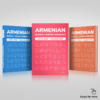
Armenian Reading and Writing Workbook Bundle x 3
23 550,00 ₸ -

Armenian English Alphabet Flashcard Set
10 821,00 ₸ -

Armenian Flashcard Set - Animals PRINTABLE
7 638,00 ₸