
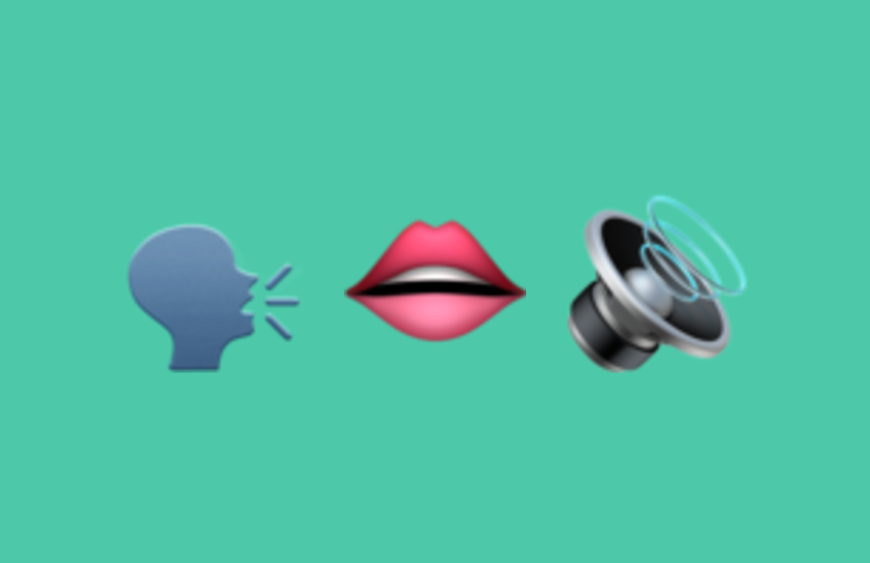
When you realise your mouth has to learn a whole new set of movements
You have been studying Armenian vocabulary and grammar, and you feel like you are making progress — until you try to say a word aloud and your mouth simply refuses to cooperate. The word “երեք” (yerek, meaning three) requires a sound — the rolled r represented by ռ — that does not exist in the English sound system. The letters “փ,” “թ,” and “ք” require an explosive puff of air that English speakers rarely produce. The gutteral “ղ” (gh) comes from the back of the throat in a way that can feel almost physically uncomfortable at first. You are not struggling because you lack ability. You are struggling because your articulatory muscles — the tongue, lips, and vocal cords that produce speech — have never been trained to make these movements.
Pronunciation is the most physical dimension of language learning. It requires retraining muscle groups that have been following the same patterns since you learned to speak as a child. This is why pronunciation improvement takes dedicated practice and why it cannot be achieved through study alone — you have to actually work your mouth in new ways, repeatedly, until the movements become automatic.
The Armenian sound system has specific features that make it both challenging and rewarding for English speakers. Once you master these sounds, not only will your Armenian be clearer and more natural, but you will also have developed a level of articulatory control that most monolingual English speakers never achieve. Learning the sounds of Armenian is not just about speaking Armenian — it is about expanding the range of sounds your mouth can produce, which makes any future language learning significantly easier.
What makes Armenian pronunciation distinct
Armenian has a three-way distinction among stop consonants — sounds like p, t, and k — that does not exist in English. In English, the difference between “p” in “pin” (aspirated, with a puff of air) and “p” in “spin” (unaspirated, without the puff) does not change the meaning of the word. In Armenian, these distinctions carry meaning. The letter “պ” (p) is unaspirated, like the “p” in “spin.” The letter “փ” (p’) is aspirated, like the “p” in “pin.” And the letter “բ” (b) is fully voiced, like the English “b.” Mastering these distinctions is essential for clear communication because confusing them can change the word entirely — “ջուր” (jur, meaning water) and “ծուռ” (tsurr, meaning crooked) differ only in their initial consonants.
In Western Armenian, the system has shifted. The original voiced consonants have become voiceless, and the original voiceless consonants have become aspirated. This means that a Western Armenian speaker pronounces the letter “բ” (b) as something closer to an English “p,” while the letter “պ” (p) becomes aspirated like “p’.” For learners, this means that pronunciation rules depend on which variety of Armenian you are studying — and that switching between varieties requires retraining your articulatory habits.
The Armenian “r” sounds deserve special attention. Armenian has two distinct r sounds: a flap or tap (represented by “ր”) similar to the “tt” in the American English pronunciation of “butter,” and a trill or rolled r (represented by “ռ”) produced by vibrating the tip of the tongue against the roof of the mouth. The trilled r does not exist in standard English, and learning to produce it takes practice — but it is one of the most distinctive and satisfying sounds in the Armenian phonological system.
Why pronunciation matters beyond sounding native
Clear pronunciation is not about eliminating your accent or trying to sound like a native speaker — it is about being understood with minimal effort by the people you are speaking to. When your pronunciation is unclear, your conversation partner has to work to decode what you are saying, which creates cognitive strain that can make the interaction tiring for both of you. When your pronunciation is clear — even if your grammar is imperfect and your vocabulary is limited — your conversation partner can focus on the content of what you are saying rather than struggling to identify the words.
Good pronunciation also builds your confidence. One of the most common reasons Armenian learners avoid speaking is the fear of being misunderstood or sounding awkward. When you know that your pronunciation is reasonably accurate, that fear diminishes, and you are more willing to engage in the speaking practice that drives real progress. Pronunciation improvement has a catalytic effect on overall language development — it unlocks the confidence to use everything else you have learned.
At Tun Online Armenian School, students can access audio recorded by native speakers from the very beginning of their studies. Hearing authentic pronunciation from day one builds accurate phonological representations in your brain that guide your own production.

Practical strategies for improving Armenian pronunciation
Start with the sounds that are most different from English — the aspirated consonants (փ, թ, ք), the trilled r (ռ), the guttural gh (ղ), and the vowel distinctions that do not exist in English. Focus on one sound at a time, spending several days on each before moving to the next. For each sound, practise three steps: hear it in isolation from a native speaker, produce it in isolation yourself, and then practise it in simple words.
Use the “mirror technique.” Watch your mouth in a mirror as you produce Armenian sounds and compare with videos of native speakers. The visual feedback helps you adjust tongue position, lip rounding, and jaw placement in ways that auditory practice alone cannot. This is especially useful for the trilled r and guttural sounds requiring precise positioning.
Record yourself speaking Armenian and compare your recording with a native speaker’s version of the same words or sentences. This comparison reveals gaps between what you think you are producing and what your mouth is actually doing. Many learners are surprised to discover that the sounds they thought were accurate are not as close to the target as they believed — and the recording provides the objective feedback needed to adjust.
Drill minimal pairs — pairs of words that differ by only one sound, like “բար” (bar, meaning “word”) and “փար” (p’ar, meaning “glory”). Practising these pairs forces your brain and mouth to make the fine distinctions that carry meaning in Armenian. Regular minimal pair practice is one of the most efficient ways to improve both perception and production of challenging sound distinctions.
Finally, be patient. Pronunciation improvement happens slowly because you are retraining muscle patterns that have been established for decades. Consistent daily practice — even just five minutes of focused pronunciation work — produces cumulative improvement that is visible over weeks and months. The goal is not instant perfection but steady progress, and every small improvement in pronunciation makes your Armenian more enjoyable for you to speak and easier for others to understand.
Ready to start learning Armenian?
Tun Online Armenian School is available online to students in 30+ countries. Students can log in and learn Eastern or Western Armenian at a pace that suits them, and it features lessons, quizzes and interactive games to make learning fun.

Create your free account and start your first lesson now!
✅ Available on mobile
✅ Available on desktop and laptop
✅ Ad-free learning experience
✅ Live practice with other Armenian speakers
✅ Beginner, Intermediate and Advanced levels
✅ Tutor help available
✅ Try before you buy with 4, 8 or 12 lessons free
✅ Cancel any time

Related Articles





-

Armenian Suffixes Masterclass Series – 11 lessons
$84.00Original price was: $84.00.$84.00Current price is: $84.00. -

Online Armenian School
$50.00 – $107.00 / month -

5 x Armenian Lesson Sample
$54.00Original price was: $54.00.$54.00Current price is: $54.00. -
Armenian Sentence Structure Masterclass Series – 8 lessons
$84.00Original price was: $84.00.$84.00Current price is: $84.00. -
Armenian Past/Present/Future Masterclass Series – 8 lessons
$84.00Original price was: $84.00.$84.00Current price is: $84.00. -

Armenian Reading and Writing Masterclass Series – 14 lessons
$112.00Original price was: $112.00.$112.00Current price is: $112.00. -
Armenian Reading and Writing Workbook Bundle x 3
$53.00Original price was: $53.00.$53.00Current price is: $53.00. -

Armenian English Alphabet Flashcard Set
$25.00Original price was: $25.00.$25.00Current price is: $25.00. -

Armenian Flashcard Set - Animals PRINTABLE
$18.00Original price was: $18.00.$18.00Current price is: $18.00. -

Armenian Flashcard Set - Emotions and Feelings PRINTABLE
$18.00Original price was: $18.00.$18.00Current price is: $18.00.
