
When the honeymoon phase of Armenian learning is over — and what comes next
You started learning Armenian with genuine excitement. The alphabet was a beautiful puzzle to solve. Your first words felt like small victories. Every new phrase was a key turning in a door you had wanted to open for years. Those early weeks or months carried their own momentum — the learning curve was steep and visible, and you could measure your progress almost daily. But then something shifted. The rapid gains slowed. The alphabet, once novel, now required grinding repetition. The vocabulary lists grew longer, and words you thought you had learned kept slipping away. The middle stretch had arrived.
This is the phase where most learners quit — not because they lack ability, but because they misunderstand what the middle is for. The beginning of language learning is about acquisition: you are gathering new knowledge at a rapid pace, and your progress is obvious because everything is new. The middle is about consolidation. Your brain is not just storing new information; it is building the neural infrastructure that will eventually make Armenian feel automatic. That infrastructure takes time to construct, and during its construction, it can feel as though nothing is happening at all. But something is happening — something essential and irreversible.
The learners who reach fluency are not the ones who never felt discouraged. They are the ones who understood that the middle phase is not a sign of failure — it is the work itself. They found ways to sustain their practice through the plateau because they recognised that the plateau was not an indication of stopped progress but of deep, invisible integration happening beneath the surface of conscious awareness.
Why the middle of language learning is psychologically harder than the beginning
At the start, every study session brings visible rewards. You learn ten new words and you know ten words you did not know before. You master a grammatical pattern and you can immediately form sentences you could not form yesterday. This immediate feedback is psychologically reinforcing — your brain releases dopamine in response to the sense of accomplishment, and that dopamine fuels further effort. The middle, by contrast, operates on a different reward schedule. Progress becomes gradual and cumulative rather than discrete and visible. You might study for a week and feel no different, even though your brain has been quietly strengthening its Armenian networks the entire time.
This shift in the nature of progress collides with another challenge: the gap between your taste and your ability grows wider. By the middle phase, you know enough Armenian to recognise how much you still do not know. You can hear native speakers and understand just enough to be aware of the vast distance between their fluency and your own. This awareness, while a sign of developing linguistic sensitivity, can be deeply discouraging if you interpret it as evidence of inadequacy rather than as a normal developmental stage.
Why relying on willpower alone is an unreliable strategy
Many learners respond to a motivation dip by trying to force themselves forward through sheer discipline — setting rigid schedules, berating themselves for missed days, treating language learning as an obligation rather than a pursuit. This approach typically backfires. Willpower is a finite resource, and when it is depleted, the activity it was sustaining collapses. You miss one study session, then feel guilty, then miss another because the guilt has made Armenian study feel like a burden. This cycle can spiral until the learner quietly decides that they are simply not a language person — a conclusion that is almost never accurate but feels true in the moment.
What works far better than willpower is structure — building Armenian into your life in ways that reduce the need for motivation rather than demanding more of it. This means designing routines that are small enough to be sustainable, varied enough to hold interest, and connected to genuine sources of meaning that outlast the inevitable fluctuations in enthusiasm.

How Tun Online Armenian School keeps learners engaged through the middle stretch
At Tun Online Armenian School, students can follow a structured pathway that breaks the long middle of language learning into manageable, visible milestones. Each lesson completed, each quiz passed, and each level advanced provides the kind of clear feedback that the middle stretch otherwise lacks. The platform’s gamified elements — interactive exercises, achievement markers, and progressive difficulty levels — help sustain the sense of forward movement even when the day-to-day experience of improvement feels subtle.
Tun also addresses another common mid-journey challenge: isolation. Language learning becomes harder when it is a solitary pursuit. The platform’s live practice sessions connect learners with real Armenian speakers, creating social accountability and genuine communication experiences that remind you why you started learning in the first place. When you have a conversation in Armenian — however halting — and realise you understood and were understood, the motivation that follows is not forced. It is authentic, because it emerges from the very thing that drew you to the language: the desire to connect.
Practical strategies for enduring and enjoying the middle phase
First, narrow your focus. Instead of trying to improve everything at once — speaking, listening, reading, grammar, vocabulary — pick one skill and track it for two weeks. Perhaps you will focus on understanding spoken Armenian by listening to short audio clips daily. Or you will expand your food-related vocabulary. Concentrated effort in one area produces visible progress, and that progress generates the motivation to tackle the next area. The middle feels more manageable when you are not trying to climb the entire mountain every day.
Second, reconnect with your deeper reason for learning Armenian. Is it to speak with grandparents? To read Armenian poetry in the original? To pass the language to your children? To feel more fully Armenian in your own identity? Writing down this reason — not just thinking about it, but putting it on paper — and keeping it where you can see it provides a reservoir of motivation that outlasts the daily fluctuations in energy and enthusiasm. The middle is where your initial excitement either matures into commitment or fades into a memory of something you once tried.
Third, change your metric. Instead of asking “How much better am I today than yesterday?” — a question that almost always produces a discouraging answer in the middle phase — ask “Did I do something in Armenian today?” The shift from improvement-based measurement to consistency-based measurement removes the emotional penalty of invisible progress and rewards the behaviour that, over time, reliably produces fluency.
Ready to start learning Armenian?
Tun Online Armenian School is available online to students in 30+ countries. Students can log in and learn Eastern or Western Armenian at a pace that suits them, and it features lessons, quizzes and interactive games to make learning fun.

Create your free account and start your first lesson now!
✅ Available on mobile
✅ Available on desktop and laptop
✅ Ad-free learning experience
✅ Live practice with other Armenian speakers
✅ Beginner, Intermediate and Advanced levels
✅ Tutor help available
✅ Try before you buy with 4, 8 or 12 lessons free
✅ Cancel any time

Related Articles





-

Online Armenian School
1 045,00 Kč – 2 239,00 Kč / month -

5 x Armenian Lesson Sample
1 120,00 Kč -
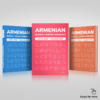
Armenian Reading and Writing Workbook Bundle x 3
1 105,00 Kč -

Armenian English Alphabet Flashcard Set
508,00 Kč