When You're Starting From Zero
There is something both exciting and daunting about standing at the very beginning of a new language. Every single word you encounter is new. The script is unfamiliar. The sounds include phonemes that English does not use. You don’t yet know enough to know what you don’t know. Where do you actually start?
This question has a clearer answer than it might seem, because language acquisition research gives us reasonably consistent guidance on what produces results at the early stages. The challenge is that much of the advice available online for beginning learners is either too vague (“immerse yourself!”) or too intimidating (“study grammar for two hours daily”). What beginning Armenian learners need is a realistic, specific sequence that matches the actual structure of the language and the limits of early-stage memory.
The principles below are not theoretical — they are drawn from what works for real learners in the early weeks and months of Armenian study.
Week One: Three Things Only
The temptation in the first week is to try to learn everything at once — to open ten browser tabs, download three apps, and start a vocabulary list while simultaneously watching Armenian YouTube videos. This approach produces a feeling of activity but not much actual acquisition. Focus is more important than breadth at the beginning.
In the first week, three things matter: a decision about which variant to learn (Eastern or Western), a start on the alphabet, and the ability to produce a handful of greetings and basic phrases. That is enough. The greetings give you immediate, usable output — something real you can say to an Armenian speaker — while the alphabet learning gives you the key to reading everything else. Attempting vocabulary and grammar simultaneously in the first week adds cognitive load before the foundation is established.
- *Choose your variant.** This decision is outlined elsewhere in detail, but it needs to happen before you start so that you are studying the right sound system, the right spelling conventions, and the right vocabulary from day one.
- *Start the alphabet in groups of five.** Not all thirty-eight at once — just the first five. Learn each letter’s sound, write it by hand, and say it aloud. Move to the next five only when the first five are solid. This sequence takes three to four weeks total, which feels slow but produces the durable retention that rapid memorisation does not.
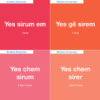
- *Learn ten greeting and introductory phrases.** Hello, goodbye, thank you, please, my name is, how are you, I’m well, excuse me, yes, no. These phrases are immediately useful, immediately memorable, and give early speaking practice a foothold.
Month One: Building the Foundation
By the end of the first month, a dedicated beginner should have working familiarity with the full alphabet, a vocabulary of forty to sixty commonly used words, the ability to introduce themselves and conduct a basic greeting exchange, and a beginning understanding of how Armenian sentences are structured.
This is a modest set of goals compared to what some language learning programmes promise, but it is realistic and genuinely achievable. More importantly, it is a solid foundation — one that subsequent learning builds on rather than having to revisit constantly.
Grammar in the first month should be kept simple: basic sentence structure, the verb “to be,” simple present tense for common verbs, and an introduction to the concept of noun cases without attempting to master the full case system yet. Understanding that Armenian marks grammatical relationships differently from English — through word endings rather than fixed word order — is a conceptual shift that needs to happen early, but the details can accumulate gradually.

The Role of Listening From Day One
One aspect of Armenian learning that beginners often undervalue is listening. The temptation is to focus on what you can control — the letters on the page, the vocabulary list, the grammar exercise — and to treat listening as something to add later when you have more knowledge. This is a mistake.
Ear training in Armenian is a slow process that needs to begin early because the sounds of the language — its specific consonant qualities, its vowel system, its rhythm and intonation — are absorbed gradually through repeated exposure over many months. Listening to Armenian from day one, even without comprehension, begins this calibration process. The content doesn’t need to be understood to be useful; even passive exposure to Armenian speech patterns trains the auditory system in ways that make later comprehension significantly faster.
How a Structured Platform Supports First Steps
At Tun Online Armenian School, beginner learners start with a structured progression specifically designed for people coming to Armenian with no prior knowledge. The alphabet, pronunciation, vocabulary, and grammar are introduced in a sequence that reflects how the knowledge actually builds — not in alphabetical order, not by topic, but in the developmental sequence that produces durable acquisition.
The platform’s quizzes and interactive games provide the retrieval practice that makes early learning stick rather than evaporate. And the fact that tutor support is available from the beginning means that specific questions — about pronunciation, about the difference between similar-looking letters, about a grammatical point that isn’t clear — can be addressed as they arise rather than accumulating into confusion. First steps in a new language are always a little wobbly. The right support structure makes them lead somewhere worth going.
Frequently Asked Questions
- *What should I focus on in my first month of learning Armenian?**
Four goals are sufficient for the first month: learn the full alphabet, build a core vocabulary of 40 to 60 common words, master basic greetings and self-introduction, and develop a beginning sense of Armenian sentence structure. These goals are concrete, achievable, and create a foundation that makes the second month feel like building rather than starting over.
- *How quickly will I see results when learning Armenian?**
Visible results in reading come fastest — within two to four weeks of consistent alphabet practice, most learners can decode simple words. Speaking and listening comprehension develop more gradually. The first three months often feel slow, but learners who maintain consistent practice typically experience a noticeable breakthrough at some point in the second or third month, where previously effortful recognition starts to become more automatic.
- *What is the biggest mistake beginners make when starting Armenian?**
Attempting to learn too many things simultaneously before any of them is solid. The most common version is trying to cover vocabulary, grammar, and the alphabet all at once in the first week, which spreads cognitive load across too many demands and allows nothing to consolidate. Going deep on the alphabet first — before layering in significant grammar study — produces a more stable foundation and faster overall progress.
- *Should I use a textbook, an app, or an online course to start learning Armenian?**
A structured online course provides the most complete starting environment: sequential lessons, audio by native speakers, interactive practice, and access to tutor support in one place. Textbooks are a valid alternative if a good one is available for your chosen variant, but they typically lack the audio and interactive components that support pronunciation and listening development. Apps alone are not sufficient as a primary starting resource — they are better used as supplements to structured learning.
- *How do I know if I am pronouncing Armenian letters correctly at the beginner stage?**
Comparison with native speaker audio is the most accessible check — listening carefully to how a sound is produced by a fluent speaker and comparing it to your own production. Recording yourself and listening back reveals differences you cannot hear in real time. Tutor feedback, where available, provides the most precise correction. Armenian has several sounds (aspirated stops, the Armenian “r”) that require specific attention and are best addressed early before approximations become habits.
Ready to start learning Armenian?
Tun Online Armenian School is available online to students in 30+ countries. Students can log in and learn Eastern or Western Armenian at a pace that suits them, and it features lessons, quizzes and interactive games to make learning fun.

Create your free account and start your first lesson now!
✅ Available on mobile
✅ Available on desktop and laptop
✅ Ad-free learning experience
✅ Live practice with other Armenian speakers
✅ Beginner, Intermediate and Advanced levels
✅ Tutor help available
✅ Try before you buy with 4, 8 or 12 lessons free
✅ Cancel any time

Related Articles





-
Online Armenian School
L810.00 – L1,734.00 / month -

5 x Armenian Lesson Sample
L867.00