When a gesture says more than words ever could
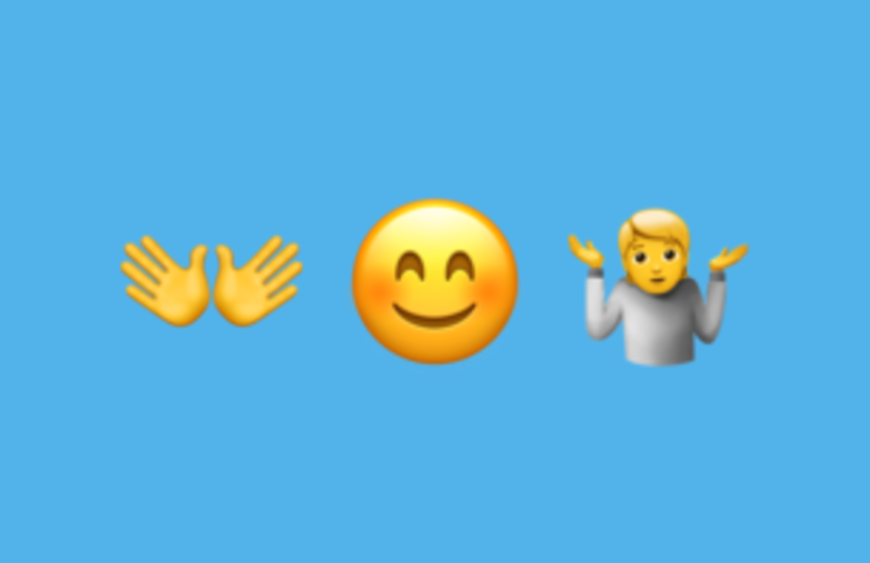
You are in a conversation with Armenian speakers. Everyone is talking animatedly, and you are following the words reasonably well. But there is another layer of communication happening that you are only partially aware of — the gestures, the facial expressions, the way people position their bodies relative to each other. A slight head tilt that seems to mean something. A hand movement that accompanies a particular phrase. A certain way of raising the eyebrows that changes the meaning of what is being said. You are not just learning Armenian words — you are learning an entire system of nonverbal communication that carries as much meaning as the language itself.
Armenian body language is a rich and expressive system that reflects the culture’s values around warmth, emotional openness, and directness in personal relationships. Armenians tend to use more gestures than speakers of many Northern European or East Asian cultures, and these gestures carry specific meanings that learners need to understand to fully participate in communication. A gesture that seems random to an outsider may be a precise communicative signal to an Armenian speaker.
Understanding body language is not a luxury for advanced learners — it is essential from the beginning, because nonverbal cues often disambiguate verbal messages. The same Armenian sentence can mean different things depending on the accompanying gesture or facial expression. Learning to read these cues accelerates comprehension and prevents misunderstandings that pure language knowledge cannot avoid.
What makes Armenian nonverbal communication distinctive
Armenian body language is characterised by a high degree of physical expressiveness, particularly among people who know each other well. Personal space is smaller than in many Western cultures — Armenians stand closer when conversing, touch more frequently, and maintain eye contact more directly. For learners from cultures with larger personal space bubbles, this can feel intrusive at first, but it is a sign of engagement and warmth, not aggression.
Specific gestures carry conventional meanings in Armenian communication. The head tilt — a slight sideways inclination of the head while speaking — often accompanies a statement that the speaker expects agreement or sympathy. A chin lift — raising the chin slightly while lowering the eyelids — can signal “no” or “I do not know” in a way that is quite different from the head shake used in many Western cultures. Hand gestures that accompany counting, emphasis, and emotional expression follow patterns that learners can learn to recognise and use.
Facial expressions in Armenian communication tend to be more transparent than in some other cultures. Armenians generally show their emotional state on their faces during conversation — pleasure, surprise, disagreement, confusion — and expect the same transparency from their conversation partners. A neutral or inexpressive face, which might be appropriate in some professional contexts in other cultures, can be interpreted in Armenian contexts as coldness, disinterest, or even hostility.
Why body language is not optional for effective communication
Research in cross-cultural communication consistently shows that the majority of meaning in face-to-face interaction is carried by nonverbal channels — body language, facial expression, tone of voice, and gesture — rather than by the words themselves. For language learners, this means that focusing exclusively on vocabulary and grammar while ignoring nonverbal communication leaves you understanding less than half of what is being communicated.
The stakes are particularly high for Armenian learners because the nonverbal system differs significantly from the English-language norms that most learners bring to their studies. An Armenian gesture that means “wait” or “slow down” might be misinterpreted as impatience by an English speaker. An Armenian use of eye contact that signals honesty and engagement might be perceived as intense or confrontational. Learning to interpret Armenian body language correctly prevents these cross-cultural misunderstandings and allows you to communicate more effectively even with limited verbal proficiency.
At Tun Online Armenian School, students can build the language skills that form the foundation of effective communication. While body language is best learned through observation and practice with native speakers, the vocabulary and listening comprehension developed through structured study provide the framework for understanding the full communicative context.

Practical strategies for learning Armenian body language
Observe Armenian speakers in natural conversation as much as possible. Whether in person at family gatherings and community events, or through Armenian films, television shows, and videos online, pay conscious attention to what speakers are doing with their bodies while they speak. Notice patterns: what gestures accompany greetings, what facial expressions accompany disagreement, how body positioning changes when the topic shifts from casual to serious. The more you observe, the more the patterns will become predictable.
When you learn a new Armenian word or phrase, learn the typical gesture or facial expression that accompanies it. Some Armenian expressions are almost always paired with specific gestures — a hand movement, a head tilt, a particular eyebrow position. Learning the full package — word plus gesture — creates a richer, more natural memory trace and prepares you to use the expression in a culturally appropriate way.
Ask trusted Armenian speakers about gestures you do not understand. If you notice a gesture being used repeatedly in Armenian conversations and you are not sure what it means, ask. Most Armenian speakers are happy to explain their nonverbal communication, and the explanation often reveals cultural values and assumptions that are invisible to an outsider.
Pay particular attention to the gestures used in situations you are likely to encounter — greetings, farewells, toasts, expressions of sympathy or congratulations. These high-stakes social situations are where nonverbal mistakes are most noticeable and where getting the gesture right has the greatest impact on how you are perceived. Learning the appropriate body language for these situations is as important as learning the appropriate words.
Finally, be patient with your own nonverbal learning. Just as with vocabulary and grammar, developing fluency in Armenian body language takes time and exposure. You will make mistakes — use a gesture in the wrong context, misinterpret a facial expression, stand at the wrong distance. These mistakes are part of the learning process, and Armenian speakers, recognising your effort to engage with the language and culture, are generally generous in their response. Each interaction adds to your internal database of nonverbal knowledge, and over time, the body language that once felt foreign will start to feel natural.
Ready to start learning Armenian?
Tun Online Armenian School is available online to students in 30+ countries. Students can log in and learn Eastern or Western Armenian at a pace that suits them, and it features lessons, quizzes and interactive games to make learning fun.

Create your free account and start your first lesson now!
✅ Available on mobile
✅ Available on desktop and laptop
✅ Ad-free learning experience
✅ Live practice with other Armenian speakers
✅ Beginner, Intermediate and Advanced levels
✅ Tutor help available
✅ Try before you buy with 4, 8 or 12 lessons free
✅ Cancel any time

Related Articles



-

-
-
Online Armenian School
R$ 259,00 – R$ 554,00 / month -

5 x Armenian Lesson Sample
R$ 277,00 -

Armenian English Alphabet Flashcard Set
R$ 126,00